Showing posts with label Baptist Ecclesiology. Show all posts

Friday, August 19, 2011

Church discipline: Practically recovering regenerate church membership

Part of a series on the church. 

Matthew 18:15-20. When we mention church discipline, we often get the picture in our minds of kicking somebody out of the church because the church members think they are ‘holier than thou,’ but church discipline is actually a system based on Matt. 18:15-20, ordained by Jesus, to lovingly restore believers to a vital relationship with Jesus Christ and to foster harmony among the body of Christ.

We need to recover the practice of church discipline. Changing our baptism and church membership policies should greatly reduce the need for church-wide discipline. The Biblical basis for church discipline is abundant: Matthew 15:15-18; 1 Corinthians 5:1-12; 2 Corinthians 2:5-11; Galatians 6:1; 2 Thessalonians 3:6; 1 Timothy 1:20; Titus 3:10

Historically, the Catholic Church lost the practice, but some of the Reformers called it a mark of a true church. Anabaptists were strict on discipline, including shunning former members. Early Baptists did not practice shunning, but discipline was common for moral violations and doctrinal error. Between 1845 and 1900, SBC churches disciplined 1.3 million members and expelled around 650,000, but the practice disappeared by 1950. “No one urged its neglect, and nearly all agreed that it should be restored. But they failed to see that they had embraced new commitments incompatible with church discipline.”

Several changes in church and society led to the decline of church discipline in the late 19th and early 20th centuries: (1) a growing American individualism which eroded the authority of the church, (2) the decline of doctrinal teaching on sin and depravity of man replaced by an evolutionary model of the goodness of human nature as not needing discipline, (3) general secularization of values, as churches adapted to culture and adopted principles of business, emphasizing numerical growth, (4) a crippling of church discipline being practiced with harsh, legalistic, punitive, and judgmental ways. 

Instead, churches (1) looked for ways to gain new members and keep them coming and happy, (2) redefined what it meant to be Baptist to focus on individual freedom and undermining the church’s authority “to judge belief and behavior,” (3) changed the churches mission to include curing social ills at the expense of communicating the Gospel, which secularized the churches. By the beginning of the 20th century, discipline in Baptist churches had become uncommon. Today it is very rare.

In order to restore discipline to the church, pastors should teach from Scripture on these ideas from Matthew 18 and other places. Congregations may want to place a brief statement in their by-laws or constitution of their understanding of Biblical church discipline, stating that it is not punitive but restorative for the individual and protective for the church, and stating that what calls for church discipline is not grave sin, but sin that the sinner refuses to admit and repent of. 

Discipline is not for the weak person who falls and is repentant, but for the rebellious one who denies his sin or refuses to repent. Further, it should be emphasized that exclusion from voting/Lord’s Supper should be only a last option, only exercised after repeated attempts to win over the offender, after prayer and love have been extended. It should never be hasty, but only after all other attempts at Matthew 18 are exhausted. It should never be final, but always open and hopeful that repentance will come and the offender welcomed back. In fact, we want the offender to continue to come to church where he may hear the Word of God and repent, but the exclusion extend to communion and voting at least.

Which sins should be a matter of church discipline? The only guideline that Scripture gives is the sin that one refuses to acknowledge as sin. It is wisdom to further limit exclusion to matters affecting the church, either its reputation in the community (sins of public knowledge) or its unity (sins that disrupt fellowship between two or more members) or doctrine (a member’s teaching or advocating unscriptural doctrine). But that matter should only come to exclusion after repeated attempts to resolve the issue in other ways have failed.

Is restoring the doctrine of regenerate church membership worth the trouble? It was the quest for a pure church that brought Baptists into being 400 years ago. Regenerate church membership is the Baptist mark of the church.


Thursday, August 18, 2011

Training at Baptism: Practically recovering regenerate church membership

"So, Mr. Tom, tell us why you think you're old enough."
Another area to help with regenerate church membership is a period of examination before and training after baptism. Examination is probing to understand if a person truly understands salvation and has submitted himself to Christ Jesus

Training is the initial disciple-making that is supposed to take place and is the church’s responsibility to provide. Examination and training were common in North Carolina Baptist churches a century ago, and continue to be important in other parts of the world today. Young children are one area to consider. 

As late as the early 1800s, during the tenure of the famous Richard Furman as pastor of First Baptist Church of Charleston, SC, children were carefully taught the church’s catechism, but “the greatest care was exercised in guarding against premature professions of piety.” Among earlier Baptists, the supposed conversion of someone under age 16-18 was considered unusual at best and more often suspect. Believer’s baptism was seen as synonymous with adult baptism. 

Baptism of children is rare among Baptists worldwide. The United States is the exception. Today, Baptists in Romania, Ukraine, Brazil, France, and nearly everywhere except the American South expect to baptize their young people no earlier than age 14.

In many of our Southern Baptist churches, while we do not practice infant baptism, we do practice toddler baptism. Between 1996 and 1993, baptisms of children under 6 years of age tripled. Recently, the only age group among Southern Baptists showing an increase in baptisms was preschoolers, a statistic not even kept until 1966. Certainly many had a genuine conversion, but many baptized as young children have never experienced a redeemed life. How do we know? 

We know because of the disturbing numbers of re-baptisms. A 1993 survey by the old Home Mission Board found that of adult baptisms (age 18+) in SBC churches, 3 of every 5 had been previously baptized. Some of course were coming from previous traditions, but 36% of all adults baptized in SBC churches in 1993 had been previously baptized in SBC churches. 

This is heinous. More than one third of those previously baptized Southern Baptists asked for re-baptism because they had just experienced conversion. It seems we are guilty of prematurely baptizing people, especially children, without insuring that they understand the gospel and are indeed responding to the leading of the Holy Spirit to submit themselves to Jesus Christ.

So what is a minimum age at which a child can be truly saved? That answer is impossible, but there is cognitive information in the Gospel that is beyond preschoolers’ concrete thinking skills. Art Murphy, Children’s Pastor at FBC, Orlando, says that “we have found that most children who make that decision under the age of 7 tend to need to make another decision later” and points to the high numbers of rebaptisms as evidence. Some people place a lot of emphasis on the age of 12. It is the age at which Jesus assumed spiritual responsibility (Luke 2:49); it seems to be the age at which Paul saw one as spiritually accountable (Rom. 7:9), what used to be called the age of accountability. It is the age of bar mitzvah and confirmation in paedobaptist churches). It is within the age-range that many developmental psychologists say significant cognitive abilities blossom. It was the age of conversion mentioned overwhelmingly in a Southern Baptist survey (more mentioned 12 than 11 and 13 combined; overall 67% were converted between 7 and 16).

How do we deal with a child age 4 or 5 who might come forward, who have asked Jesus into their hearts, and who are requesting baptism and church membership? First of all, we should encourage that child. At FBC, Dallas, young children making professions of faith are a cause for celebration that the Holy Spirit is at work in that child, but there is no hard conclusion drawn conversion has occurred nor that they should be immediately baptized. They take the attitude that the child has taken an important step in their relationship with Jesus, and a time is planned with the parents to further counsel the child.

God can move at any age in a person, but when does the church certify that? The church is in no way hurting him or keeping him from obedience. If his conversion was indeed genuine, then there is nothing the church can do to damage his salvation. If on the other hand, the church baptizes the child and receives him into church membership without a genuine conversion, then the church has hurt the child by providing a false sense of hope to him and his parents. Speaking as a pastor, usually it is the parents who want the pastor to do something who apply the pressure to baptize their child. The child is usually easily led in these circumstances. All the child wants is to be obedient to the Lord at that point. Here’s a rule of thumb: If a child is too young to read the church covenant, then he is probably too young to join the church!

Second, we need to be clear that salvation and baptism are separate issues. Salvation is God’s business, and he can save whomever he wants whenever he wants. Baptism is the responsibility of the church, and should occur only when the church has reason to believe that the one to be baptized has experienced salvation in Jesus Christ. Since baptism doesn’t complete salvation, there is no rush to baptize except to give a person freedom to partake in communion. Give the child’s commitment time to take root and grow and for the church to see evidence of new life in that little person. 

Third, some churches, like FBC Orlando, make baptism contingent on completing a four-week new Christian’s class and younger children are encouraged to grow and enroll in the class when they reach second grade. I don’t favor making baptism contingent on taking a class. In fact, I am growing in the idea that once converted one needs not to wait a long time to be baptized, but I like the idea of encouraging children to wait to be part of a new Christian’s class when they can, in fact, read the material presented to them! 

Some churches deal with that issue by baptizing children but adding other requirements to be a voting church member, such as age 16 or 18. Such a requirement seems to betray the idea that young children understand what they are doing. It doesn’t make sense that a congregation says a child can understand the most important decision of their lives at age 4 but they cannot understand how to vote on whether to pave the parking lot until they are 16.

Everyone who comes forward at an invitation should be warmly welcomed, but the church must take its responsibility seriously as a baptizing body. The church needs to have reason to believe the candidate for baptism is genuinely a believer. It is the church who decides who are to be church members, not the individuals coming forward. Christ Himself gave the church the competence and authority to make this decision, but we have exalted soul competence and neglected church competence. In order to make an intelligent vote on admitting someone to membership, they need some basis on which to vote.

Wednesday, August 17, 2011

Church Covenant: Practically recovering regenerate church membership

What can a church do practically to begin recovering regenerate church membership? There are three main ways: (1) Go back to the old practice of the church covenant, (2) Examination before and training after believer’s baptism, (3) Return to church discipline.

Church Covenant Church covenants have always been part of Baptist life from the beginning. It is a statement of the membership’s aims and its commitment to one another. It should be reaffirmed annually by every member, and read corporately at important times in church life, such as when the ordinances are celebrated. We find Nehemiah leading Judah to covenant together and reaffirm it (Nehemiah 9:38-10:39). 

Reaffirming the covenant gives churches a way to handle inactive members without the offense of the church taking action against them. We don’t want offense taken, but if they cannot participate enough for this, then they choose to exclude themselves.

Traditional Baptist Covenant (click to enlarge)
Some congregations handle it this way: If they do not affirm the church covenant by coming and signing it, then they are visited or contacted and urged to come and sign the church covenant as soon as possible. If they do not come, effort is made to determine why they have not come. This is a time of emphasizing restoration (“We really miss your presence at church”) or perhaps evangelism. The tone is gentle but insistent that being a Christian means following Christ, and that means participation in His Body. 

After a time of patient work, their membership status then comes before the church body to regard this person as a member “not in fellowship.” They make it clear that this does not affect their salvation, nor that they will shun them, but that they will try now to win them back into fellowship. It is a call for special attention to be given to loving and praying for them. It is a way to say that membership means something in the church. It encourages a committed, participating membership.

Our church has a policy that does nearly the same thing. One year of absence from services means that member is moved to an inactive list in which they lose their voting rights on church matters. The deficiency in our policy is that we do not emphasize enough their restoration to fellowship, and our love and prayer for them.

Tuesday, August 16, 2011

Recovering the Treasure of Regenerate Church Membership

(Part of a series this week)
Recovering the Lost Treasure – So how may we recover the doctrine of regenerate church membership?

Recover the Church’s Calling: First, we must remind the congregation of the church’s calling to purity. We must teach the Biblical necessity and importance of regenerate church membership. Since the day of Augustine (4thC AD), the ideal of a pure church had been abandoned in favor of a corpus permixtum, a church with both believers and nonbelievers mixed in. The Biblical justification was the parable of the wheat and tares (Matthew 13:24-30, 36-43), with the field being the church. The problem with that justification is that Jesus said, “The field is the world” (Matt. 13:38). Later the Calvinist doctrine of God’s secret work of predestination in the heart of the elect became another support. Since no one can distinguish with full accuracy those genuinely saved and those who are not, the best solution is to make all the inhabitants of an area (a parish) members of the church. Thus we saw the rise of the state church. Everyone came together and heard the Word of God, and genuine faith would be born in the hearts of those God wanted to save.

Unfortunately, this teaching is not Biblical. The New Testament clearly pictures the church as a body of redeemed believers, God’s people, Christ’s pure Bride, living stones bound together by the Holy Spirit. Despite whatever difficulty we find in distinguishing who is genuinely saved and who is not, this is the ideal we should reach.

Recover the Church’s Competence: Second, we must recover the sense of the competence of the church. While E.Y. Mullins and later more moderate/liberal Southern Baptists of the late 20th Century highlighted the concept of soul competence, earlier Baptists emphasized church competence. The Second London Confession (1689) stated, “To each of these churches thus gathered according to His mind declared in His word, he (Christ) hath given all that power and authority which is in anyway needful, for their carrying on that order in worship and discipline, which he hath instituted for them to observe, with commands and rules for the due and right exerting and executing of that power.”

Church competence is the basis for local church autonomy. Congregations choose their own pastors, accepting and disciplining their own members, and governing themselves in all matters. Unfortunately we have retreated from this high view of church competence, especially in the area of church membership. Who are we, we say, to question the sincerity or genuineness of someone requesting baptism or church membership? Who are we to judge others as needing church discipline? We must begin again to answer, “We are the church of Jesus Christ, given competence and responsibility by Him to act in such matters, under the leadership of the Holy Spirit, manifested in the consensus of a congregation of regenerate believers.”

Then there are several practical steps we as a church may take.They will be explored in the tomorrow's post.
I am indebted to John Hammett at Southeastern Seminary for the large portion of this material.

Monday, August 15, 2011

Baptist Mark of the Church: Regenerate Church Membership

Baptists have contributed a number of distinctives to the doctrine of the church: believer’s baptism, congregational government, local church autonomy, and the priesthood of the believers are examples. There is, though, a more fundamental idea about what the church should be that roots all these distinctives – a body of regenerate (i.e., regenerated, saved) believers. Regenerate church membership is the distinctively Baptist mark of the church.

Baptist historian Leon McBeth writes, “Perhaps the origin of Baptists is best explained as a search for a pure church.”[1] The idea of a pure church as a pure Bride of Christ leads to the Baptist mark of the church, regenerate church membership. Believer’s baptism is important because it is a way we ensure the church remains pure. Closed communion reflects the high value of a pure and regenerate church. Congregational government is possible because the church is composed of regenerate believers. 

Effective church discipline is possible because of a regenerate church membership, for only such a church will have the compassion and courage to lovingly correct and protect a believer and the church membership. Church discipline protects the purity of the church by removing those whose lives demonstrate they are unregenerate (unsaved.) In 1905, at the first Baptist World Congress in London, J.D. Freeman said, “The principle of regenerate church membership more than anything else, marks our distinctiveness in the world today.”

Baptist Confessions of Faith – Regenerate church membership (a congregation of saved individuals) is also reflected in the historic Baptist confessions of faith. Each of them show a concern that those baptized and received as members of the church be genuinely saved by Christ Jesus, or “visible saints,” living a separated life, different from the world, giving evidence of the faith they profess. The Somerset Confession (1656) declares, “In admitting a member into the church of Christ, it is the duty of the church, and ministers whom it concerns, in faithfulness to God, that they be careful they receive none but such as make evident demonstration of the new birth, and the work of faith with power.” The Second London Confession (1689) says, “The members of these churches are saints by calling, visibly manifesting and evidencing (in and by their profession and walking) their obedience unto that call of Christ.” The Charleston (SC) Confession (1773) adopted three prerequisites to church membership. First, they required conversion (“an entire change of nature”). Second, they required that new members have some competent knowledge of divine and spiritual things, viz., doctrine. Third, they required that church members’ lives not contradict their profession of faith, that their lives support their confession.

Church Discipline – Zeal for regenerate church membership can be seen in Baptists’ historic emphasis on church discipline. From the time of the early Anabaptists (1500s) until the late 1800s, church discipline was commonly practiced among Baptists. There was no mean or judgmental spirit behind it, but a concern for the purity of the church, for people who name Christ to live like followers of Christ. At the end of the American Revolution, only 10% of the American population was Evangelical

The area roughly considered to be part of the ...Image via Wikipedia
The area generally considered the Bible Belt
After the Second Great Awakening (1801-2) in the South, conversion became so radical, so demanding, so counter-cultural, that many Southerners were hesitant to commit to membership in Baptist churches. Baptist churches in the South had 2 to 3 adult adherents for every member of a church. The concept of an inactive member was unknown and would have been ruled a matter for church discipline. In fact, a church that tolerated or had an inactive membership list would have been considered in doctrinal error. As late as 1810, no more than 20% of Southerners were members of an evangelical church. 

Between 1810 and 1830, Southern evangelicals, including Baptists, began to accommodate their teachings and practices to the culture to present fewer obstacles to church membership, and the numbers began to rise. Churches won members by surrendering to the culture, and religion became a mile wide and an inch deep, leading to what became the Bible Belt.[2]

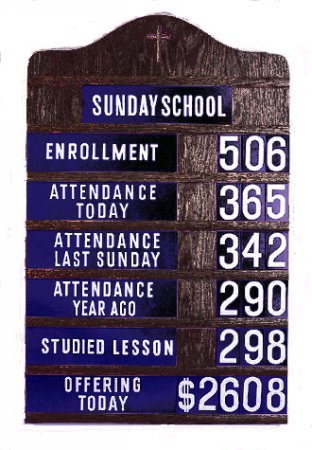
Today, Southern Baptist churches make a mockery of the concept of a regenerate church membership. In 2007, of 16.2 million Southern Baptists on roll, average Sunday morning worship attendance was 6.15 million – less than 38%.[3] For the local church, this means that from a roll of 400 members, 150 are present on any given Sunday morning. For the Southern Baptist Convention as a whole, it means 10 million supposedly regenerate members were not committed enough to attend their church’s major worship service once a week. Many of our churches have names on the roll whose whereabouts are unknown, even if they are dead or alive.

The Missing Link It is obvious that regenerate church membership is totally missing in Southern Baptist life, and the consequences are disastrous. Membership in an SBC church means nothing, and our corporate witness is soiled for unbelievers. In a Lifeway survey, 72% of respondents said the churches are full of hypocrites. Worse, 86% said one can be a Christian without being a member of a church. Even the practice of congregational government becomes difficult when unsaved church members are a significant voice in the church. If 60% of the congregation has no interest in the church, how can the congregation possibly hear God? More tragic, millions of church members are trusting in their membership to get them to heaven but in all other respects they are non-Christian. If we have 10 million missing church members, most of them are most probably unsaved. There is a grave concern about your eternal destiny when you don’t associate with your congregation. If there is no fruit, then perhaps there is no root.


[1] Leon McBeth, The Baptist Heritage, 75.
[2] See Christine L. Heryman, Southern Cross: The Beginnings of the Bible Belt, 1997.
[3] It bears noting that the percentage has increased from 33% in 1997.

Thursday, August 11, 2011

The Significance of the Lord's Supper

  1. Remembrance. We remember the sacrifice of Jesus to the point that it affects our present experience of the Lord’s Supper. The Supper proclaims the Lord’s death in a vivid, visual way. We look back with thanksgiving (what eucharist means), humility, and awe.
  2. Fellowship. The Lord’s Table is for the Lord’s body, the church. In the Supper we symbolize and reaffirm our communion and unity (1 Cor. 10:16-17), and we recognize the Body of Christ (the church) as we partake (1 Cor. 11:29). As our Passover, it is the time we renew covenant vows which bind us to the Lord and to one another (Baptist churches in the past recited their church covenant prior to taking the Supper.) Thus the Lord’s Supper was not observed by individuals or families, but by the Body of Christ as an expression of unity and commitment to one another (“when you come together” 1 Cor 11)
  3. Anticipation. The Lord’s Supper is a rehearsal and foretaste of the Messianic Banquet at the marriage feast of the Lamb (Luke 14:15-24; Rev. 19:9). The Supper lasts only “until he comes.” Then faith will become sight and remembrance will become reality. Until then we live expectant of His soon return. Next Year in Jerusalem!
  4. Self-examination. (1 Cor. 11:28). This is one of the most often ignored commands of the Bible, despite the stern warnings associated with disobedience to it. We are too careless about the Supper today. It is so important to a proper understanding and practice of the Supper. In the early 1800s, there would be seasons of communion – time that would last a week to three weeks to get right with God and others.
The proper participants are believers who are baptized (Acts 2:41-42). This has been a question in Baptist history. The normal pattern among Baptists is that baptism precedes church membership and participation in the Lord’s Supper. But the Baptist understanding of valid baptism excludes those who were baptized as infants. If they are believers and are attending a Baptist observance of the Lord’s Supper, should they be allowed to participate? For example, Baptist pastor John Bunyan had many Anglicans in his congregation. Should he let them take communion? Bunyan did. Another well-known British Baptist leader, William Kiffin, said it was a matter of obedience to Scripture not to let them take communion. As a result of this disagreement, there have emerged three general patterns among Baptists regarding the Lord's Supper.

  1. Open Communion (Offered to all). This is the view that all believers should be allowed to partake, and has been advocated as far back as John Bunyan and supported by Baptists such as Charles Haddon Spurgeon. However, most Baptist confessions of faith, except for Free Will Baptist confessions, have not supported this view. Supporters of open communion say the Lord’s Supper is the Lord’s, not the church’s, and therefore should be offered to all believers.
  2. Close or Closed Communion. In churches where close or closed communion is practiced, participation in the Lord's Supper is open only to believers who have been immersed. This is the majority Baptist position and is in view in the Baptist Faith and Message 1925, 1963, and 2000. The reason given is that the Lord’s Supper is given to the church, not to individuals, that the church has the responsibility before God to protect the purity of the church’s regenerate membership, and the church has the authority and competence to require that those who partake in this ordinance be believers who have a real baptism, that is, baptism by immersion.
  3. Closed or Double Closed Communion. In churches where closed or double closed communion is practiced, the Lord's Supper is offered only to members of that particular local church. In this line of reasoning, the protection of the regenerate church membership of the church is of paramount importance. These churches, few in number today, prefer not to offer the Lord's Supper to non-members since the congregation of that church has adjudged the testimony of only of those who are part of the membership and not those outside the church's membership.
Thanks to John Hammett of Southeastern Seminary for much of the original basis of this material.

Wednesday, August 10, 2011

The Church Ordinance of the Lord's Supper

Baptism is a one-time ceremony. The Lord’s Supper is a continuing ceremony signifying our growing fellowship with the Lord Jesus Christ and His Body, the Church. The Lord’s Supper is the only act of worship which comes with specific instructions and therefore should be given more attention than Baptists generally afford it.

The Bible calls the Lord’s Supper by several terms: the breaking of bread (Acts 2:42), the Lord’s Table (1 Cor. 10:21), Communion (1 Cor. 10:16), the blessing (1 Cor. 10:16), the Lord’s Supper (1 Cor. 11:20, here it is a complete meal), the Thanksgiving or Eucharist (1 Cor. 11:24). The Catholic term, mass, is not found in Scripture but comes from a Latin verb mittere (to send) and was used as early as the late 4th century by Ambrose.

Jesus instituted the Lord’s Supper (Matt. 26:17-30; Mark 14:12-26; Luke 22:7-30; 1 Cor. 11:17-34; also Acts 2:42; 1 Cor. 10:14-22) in the midst of the observance of Passover (Exodus 12) with his disciples. The Lord’s Supper is a covenant meal (Luke 22:20: “this cup is the new covenant”), and Christ is our Passover Lamb (1 Cor. 5:7).

The words of institution “This is My body,” in Latin, “Hoc est corpus meum,” (the magic words “hocus pocus”), have caused a lot of controversy. There are four interpretations.
  1.  TRANSUBSTANTIATION – (Catholic view) When a properly ordained priest lifts the elements (host), and repeats “hoc est corpus meum,” a miracle occurs. While they appear as bread and wine, the elements are literally become in substance (transubstantiated) into Christ’s body and blood. The celebration of mass thus involves a recrucifixion of Christ, granting forgiveness for venial sins, increases grace, preserves from mortal sin, and gives hope of salvation. How did they come to this? Gradually over the centuries, ideas of grace through the sacraments, the power of the ordained clergy, and a desire for magic in religion led to the official adoption of this view at the Fourth Lateran Council (1215). Unfortunately this position is defective theologically (contradicting Christ’s once-for-all sacrifice), exegetically (the literal interpretation of John 6:32-39 is unnatural and forced – Jesus literally distributing his own body), ecclesiologically (the effectiveness of the priest’s ordination is more important than Christ’s blessing on those who take it by faith), and philosophically (using Aristotelian categories that are foreign to Scripture). That’s good reason why the Reformers opposed it as blasphemous and a chief error of the Roman Catholic Church.
  2. CONSUBSTANTIATION – (Lutheran view). While Martin Luther denied the Roman Catholic view, he believed that faith was necessary for a blessing in the Supper, and he affirmed the real, bodily presence of Christ by Christ’s power “in, with, and under” the elements. Christ comes clothed in bread and wine. While there are some philosophical ideas foreign to Scripture, the larger problem is exegetical. Perhaps because of his Catholic heritage so dear to him, Luther could not accept an interpretation that was less than totally literal. For him Christ was omnipresent everywhere the Supper was being conducted. He and Ulrich Zwingli could not agree, and at the famous colloquy of 1529, he demanded that “is” means “is.” It maddened him that Zwingli said “is” means “signifies” in many places in Scripture.
  3. SPIRITUAL PRESENCE -- (Calvin, Presbyterian view). “This is my body” means that Christ promises his spiritual presence at the Supper, but not his bodily presence in the elements. The elements are important because they are God’s ordained signs, but their importance is in what they signify. The English Baptists who were Calvinist held to this view as well in their 2nd London Confession.
  4. MEMORIAL – (Zwingli, Anabaptist, most Baptists). The words “this is my body” are understood as “this signifies my body.” While Zwingli believed Christ was spiritually present with believers when they gather in his name, the Lord’s Supper was a memorial meal (“This do in remembrance of Me.”)
Thanks to John Hammett at Southeastern Seminary for much of this material.

Tuesday, August 09, 2011

The Ordinance of Baptism: What is Proper

The Proper Subjects for Baptism – Baptism, by its nature, can only be appropriate for those who have made a personal faith commitment to Christ. This position leads to a conflict with those who believe in infant baptism.

Catholic belief in infant baptism is linked to the idea of removing the stain of original sin apart from faith. Luther, Calvin, and Zwingli saw the importance of faith at baptism, but they did not surrender infant baptism because all three believed God acted in infant baptism. Luther said that in infant baptism God laid claim to the infant, giving the infant a hope. 

Calvin and Zwingli pointed to the faith of the parents and the church. Children were accepted as members of the covenant community on the basis of the faith of others, and it was presumed they were headed for salvation, though they must personally confirm that decision made for them at infant baptism. But what happens when a child does not decide to become a Christian? A strong practical reason the Magisterial Reformers held on to infant baptism was fear of anarchy and chaos resulting from dismantling the unity that church and state had in infant baptism.

Calvin and Zwingli also offered Biblical parallels to infant baptism: circumcision and the household baptisms of Acts. With the sign of circumcision, we would reply that it is not paralleled in baptism but in an inward spiritual reality of faith of the heart (Rom. 2:28-29; Col. 2:11), and if the parallel were true, it would only hold for male children anyway. On the parallel of household baptisms (Acts 16:31-34; 18:8), we say that all were baptized who believed, as the text indicates. Believers are the proper subjects of baptism.

The Proper time for Baptism – In Acts the proper time for baptism was normally immediately after conversion (Acts 2:38-41; 8:36-38), though it was not commanded nor always followed (Acts 4:4). Some wait a few weeks or longer to allow the convert to affirm his decision, to understand baptism more fully, and show evidence of conversion. 

In some churches, a new believer’s class is required before baptism. In the church of the 200s-300s, they were required to go through catechetical training and deliverance ministry before being baptized. I am personally moving toward a quicker baptism for candidates rather than waiting a long time. In the 18 texts mentioning baptism in Acts, 6 times it was immediate, 3 times it was soon, and 9 times there is no description of the timing.  It does not seem to have been that important.

The Proper Mode of Baptism – While sprinkling and pouring are used in some settings, the word baptize (Greek: baptizo) means plunge under water, or immerse. The NT descriptions of the baptized coming up out of the water (Mark 1:10; Acts 8:39) fit immersion, and the symbolic meaning is only portrayed in immersion (Romans 6:3-4). If sprinkling had been meant, there is a NT word for sprinkling: rantizo.

The Proper Administrator of Baptism – While Baptism has normally been assigned to pastors, there is no biblical reason for limiting it to them. Ordination is certainly not required, and since baptism is into Christ and the church, the local church should be seen as the baptizing agent, and free to assign anyone they choose to perform the baptism.

Adapted from material provided by John Hammett at Southeastern Seminary.

Monday, August 08, 2011

The Church’s Ordinance of Baptism


The Ordinances – Catholic and Eastern Orthodox churches practice seven sacraments: baptism, confirmation, Eucharist, penance, last rites (anointing the sick), matrimony, and holy order (ordination). The New Testament gives us two which we are commanded to observe: water baptism and the Lord’s Supper (Matt. 28:19-20; Luke 22:19-20; 1 Cor. 11:23-26). They are Jesus-initiated and Jesus-commanded. Some Primitive Baptists add a third: foot washing (John 13). These acts do not provide grace to its participants. They rather bear witness to Christ’s grace.

The Lord commissioned His people to do three things (Matt. 28:19-20): to make disciples of all nations, to baptize gospel believers, and to teach them to observe the instructions he gave his Apostles, now found in the New Testament. The Great Commission and the practice of the early churches (Acts 2:41; 8:38; 10:46-47; 18:8) show that water baptism is an ordinance to be obeyed by all believers who are physically able to comply. It involves obedience to the Lord’s command.


Baptism’s Meaning – The background of baptism lies in the Jewish mikveh (washings), especially for converts, and in the baptism of John the Baptizer, but Christ gave baptism new meaning.


1.       IDENTIFY WITH CHRIST – The central idea of believers’ baptism is identification with Christ because we are baptized into Christ (Rom. 6:3; Gal. 3:27) and identify with his death, burial, and resurrection (Rom. 6:4). Acts 2:41 makes the sequence clear: receiving the Word, baptism, being added to the church. Therefore the proper subjects of baptism are believers who can affirm their faith in Christ.


2.       IDENTIFY WITH THE CHURCH – Acts 2:41 also indicates that baptism led to church membership. Baptism was the doorway to church membership. Just as Spirit baptism at conversion places one in the universal church, so water baptism places one in the local church. Baptism is only valid when performed as a believer, thus Baptists have required those who join their churches from denominations that practice baptism other than immersion to receive believer’s baptism as a requirement for membership. Some Baptists even require baptism by immersion in a Baptist church only (sometimes called alien immersion). Baptists believe that baptism by immersion is a clear command of Christ, not just an interpretation of Scripture. This is an example of why denominations are good things. Spiritual unity is maintained without surrendering one’s own convictions. There are secondary issues, yes, but it is okay to have secondary issues.


3.       No Baptismal RegenerationBeliever’s baptism means that we deny all baptismal regeneration -- that one's baptism has any value in their salvation. Baptism does not and cannot save a person. Baptism has no mystical power to accomplish anything – it only testifies to what has already happened – salvation. The thief on the cross is enough to show that baptism is not necessary for salvation.

Tuesday, August 02, 2011

The Church's Ministry of Missions and Evangelism

Part of a series on the ministries of the church found in Acts 2:42-47.
Well-drilling missionary David Humphries preaching in Liberia

Matthew 28:18-20: “Go, therefore, and make disciples of all the nations…” We look forward to the day when every person would hear of His name and that some from every people would believe in His name (Matt. 24:14; Rev 7:9). 

Thanks to missionaries, more individuals confess the name of Jesus than any other religion in the world. An arm of the Christian movement is found in nearly every country. 

In AD 100, there were 360 people for every Christian. Today  one in nine people on the planet is an active believer. Christianity is growing faster than ever before, in many places exceeding population growth. There is no need of pessimism. But at the same time, two-thirds of the world’s population do not know or believe the Gospel. Why? Cultural distances between believers and the lost.

Evangelism or Missions? We often confuse the terms missions and evangelism. Evangelism means sharing the Good News of Jesus Christ with someone within one’s own culture (Mark 16:15). In Acts 2:47, it was the Lord who added daily believers to the church, but we must be intentional about evangelism. The training programs we use, memorizing a presentation and presenting it to people, is really designed to teach believers to understand for themselves how the gospel fits together and how to talk about it to others. People in our culture today usually come to Christ after journeying with other Christians, building relationships while they examine and consider their claims about Christ.

Missions is the extension of the Kingdom through making disciples among the nations (John 17:18; 20:21). Missions began with the promise to Abram that all the families of the earth would be blessed through him (Genesis 12:3) and continues with the various versions of the Great Commission (Matt. 28:18-20; Mark 16:15; Luke 24:46-49; John 20:21-23; Acts 1:8) to the climax around the Throne (Revelation 7:9) where the Lamb is praised by every tribe, nation, language, and tongue.

Go or Send? Missions and evangelism involves bearing witness at home (1 Thess. 1:8) and abroad (Acts 1:8; 8:4; Phil 4:10-18; Rom 15:23-29). Everyone is called to involvement in missions, whether going (as a missionary) or a sending (as a supporter). Churches have a responsibility to call their people to go to the nations and enlist prayer partnerships with specific missionaries. Most missionaries either go as “tent-makers” (paying their own way or working a job), or as missionaries requiring financial support. In Southern Baptist life, we have developed Cooperative Program giving which, along with the Lottie Moon Christmas Offering for International Missions and the Annie Armstrong Easter Offering for North American Missions, funds our missionaries, allowing them the privilege of serving without having to do support raising. 

However, in the last decade we have seen a yearly weakening of giving to the Cooperative Program. Younger Southern Baptists seem more interested in direct involvement in sending their own missionaries and leading short-term mission trips for their members. Short-term trips radically change lives and ultimately increase missions giving. The challenge is to keep the vision for missions before the people of God so that they know the priorities of the King, but it is also important that our Cooperative Program be funded and that those responsible for the funds trim every ounce of bureaucracy they can which is not Great Commission related and send those monies to those on the front lines.

Make Disciples? Jesus commanded us to make disciples (Matt. 28:19). What is a disciple? The word disciple (matheteis), means “learner.” When someone makes a decision to follow Christ they become a convert. They have converted their life to submit it to Jesus Christ, and it is marked by believers’ baptism (“baptizing”). Then they grow as disciples of Jesus Christ through the teaching of the Word (“teaching them whatsoever things I have commanded you”). How do you know when someone is discipled? When that person has a growing, vital relationship with Christ in prayer and they can feed themselves on the Word of God.

All Nations? Jesus did not just call us to make disciples among those who look like us. He commanded us to make disciples among the nations? Which nations? Commonly, nations means countries or political nation-states. In Scripture, nations means peoples or ethnic groups.  It is better to understand missionaries laboring at significant cultural distance rather than a significant geographical distance.

The majority of the least reached peoples are the last to hear the Gospel because they are the most isolated geographically, culturally, and linguistically, socially, and spiritually from witnessing Christians. A people group is considered unreached when less than 2% of their population consider themselves Christian believers. Few of them have no Christians at all among them. They average 0.4% of the people’s population. Currently there are roughly 6800 unreached people groups. Of that group, a large majority are not only unreached. No one is working among them.

They are also unengaged. Currently there are 3800 unengaged unreached people groups. The International Mission Board is asking local churches to take responsibility for one of those groups and begin to pray and go to them, working with the IMB, to see a church planting movement begin among each of those peoples. Why shouldn’t our church do this? Will it cost us time? Yes, in prayer and going. Will it cost us money? Yes, some. Will it cost us our sons and daughters? Yes, but only for a while in this life. The highest priorities are penetrating these unengaged, unreached peoples, mobilizing missionaries for them, and mobilizing missions on the congregational level.

Why the urgency? When we sense that we are in the last days, that Jesus has been given all authority to send us to the nations, we are unafraid of the persecutions that may come. When a Haitian voodoo priest or a Sudanese merchant comes to faith in Christ, it is not just one more Christian convert, it is one more sign that the demonic powers that the Kingdom of Jesus Christ is massive, global, and moving forward (Matt. 16:18-19; 11:12). If the Kingdom will repay me for everything I have walked away from in this life (Matt. 19:29), then how can I refuse a call to serve in a faraway land simply because I do not want to be away from family or consumer culture? Or worse, how can I begrudge a son or daughter going to the nations just because I want my grandchildren close by?

“The Great Commission is not merely an ideal to aspire toward, but an achievable command given by the Lord. The commissioning of the Church was accompanied by assurances of God’s power and authority and the very real presence of the Holy Spirit. The scale of the task before us is matched only by the greatness of the God who promises to accompany and empower us.” – Operation World 2010

Mission Agencies or Direct Church? In 1829 in eastern North Carolina, a great missions controversy came to a head at Falls of Tar Church here in what became Rocky Mount, NC. Baptists had fallen into two camps in regard to missions: those of the regulative principle (if the Bible doesn’t say you can, then you can’t) – the Regular or Primitive Baptists, and those of the normative principle (if the Bible doesn’t say you can’t, and it helps the Kingdom, you can) – the Missionary Baptists who organized in 1830 as the Baptist State Convention of North Carolina.

In a great debate at Falls of Tar Church, the Primitives, driven by Biblical principle, had a great orator who swayed many to their side in the debate who said that God never ordained mission boards or mission offerings. He ordained the local church to do the work of missions alone. The Missionaries, driven by Biblical mandate, but without a strong speaker, argued for the value of mission boards and mission offerings to help the churches with missions.


The two groups agreed to part ways, and the Primitive Baptists, largely of Calvinist doctrine, continued on in the same way they had been. Today they are a shadow of their great numbers in 1829. In 1830 the Baptist State Convention of North Carolina formed to promote church planting and missions. The Missionary Baptists understood the value of what a symbiotic relationship between local churches and the mission board, what missiologists today call modalities and sodalities. 

Modalities are people-oriented organizations, like local churches. Nothing is done in a local church until the people feel the same way about a direction in which to go. Sodalities are task-oriented organizations, like mission agencies/boards. Accomplishing the task is the priority.

For example, everyone is a citizen, but only qualified individuals can serve in the Navy SEALs. They must be people who can accomplish the task. Similarly, the mission boards oversee the task and select people who can accomplish the task and relate to the local churches which fund and supply missionary candidates. It is a good relationship where the board has the expertise and performs the service that the local church needs done for its own vitality.