Thursday, November 26, 2009

Come Ye Thankful People Come

Choir from our alma mater, Presbyterian College, Clinton, SC. (Thanks Rhett).


Thanksgiving's Christian roots

Thanksgiving is not just an American holiday. It is a Christian holiday.

Popular American nostalgia tells us that the first Thanksgiving was held by the Pilgrims  in 1621 after the arrival of the Mayflower at Plymouth Rock. Their motivation? They were Christians. 


The 1621 Pilgrim Thanksgiving in Massachusetts was a time of thanks giving to God. Governor William Bradford proclaimed the month of November to be dedicated to "Thanksgiving unto the Lord." Bradford wrote in his diary that their voyage and settlement was motivated by "a great hope for advancing the Kingdom of God."

In 1623, after a severe drought that ended at the conclusion of a colony-wide day of prayer and fasting, Bradford proclaimed another Thanksgiving - the Thanksgiving most Americans picture:

In as much as the great Father has given us this year an abundant harvest of Indian corn, wheat, peas, beans, squashes, and garden vegetable, and has made the forests to abound with game and the sea with fish and clams, and inasmuch as he has protected us from the ravages of the savages, has spared us from pestilence and disease, has granted us freedom to worship God according to the dictates of our own conscience; now I, your magistrate, do proclaim that all ye Pilgrims, with your wives and ye little ones, do gather at ye meeting house, on ye hill, between the hours of 9 and 12 in the day time, on Thursday, November ye 29th, of the year of our Lord one thousand six hundred and twenty-three, and the third year since ye Pilgrims landed on ye Pilgrim Rock, there to listen to ye pastor and render thanksgiving to ye Almighty God for all His blessings. William Bradford, Ye Governor of Ye Colony.

But there were earlier thanksgivings. One example happened along the James River at present-day Berkley Plantation in Charles City County, Virginia.

The year was 1619, twelve years after the establishment of Jamestown, when a group of thirty-eight settlers aboard the ship Margaret arrived after having made a ten-week journey across the Atlantic. Upon their landing, they knelt and prayed on the rich Tidewater soil with their Captain John Woodlief proclaiming:

“Wee ordaine that the day of our ships arrivall at the place assigned for plantacion in the land of Virginia shall be yearly and perpetually keept holy as a day of thanksgiving to Almighty God.”
Beginning on December 4, 1619, Berkeley Plantation (Charles City, VA), celebrated an annual thanksgiving to God on the anniversary of their safe arrival in the New World. This event was not just an early English Thanksgiving in the New World, it was an event motivated by Christian sentiment.

Thanksgiving is not just an American holiday. It is a Christian holiday.


Celebrations of “thanksgiving” would become a deeply rooted American tradition, usually brought on by periods of great hardship. On December 18, 1777, at the recommendation of Henry Laurens, President of the Continental Congress, the Thirteen Colonies gave thanksgiving to God for the American victory at Saratoga. The following year Continental Congressional chaplains issued a call to the States to thanksgiving and confession of sin. This Congressional practice continued until 1784.  

Thanksgiving is not just an American holiday. It is a Christian holiday.
  
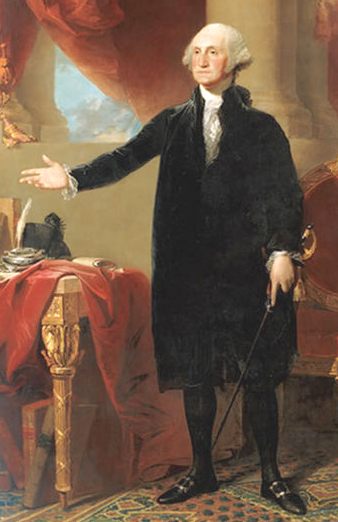
President George Washington issued the first Presidential proclamation of a National Thanksgiving Day on November 26, 1789, to thank God for the new nation, and a few of his successors followed suit. Interestingly, Thanksgiving was not a specific day or even month, and apparently each presidential proclamation was issued on the whim of whoever was in office. Sporadically between the years 1789 and 1815, days of Thanksgiving were recognized in January, March, April, October, and November. This recognition of Thanksgiving ended in 1815 following President James Madison's term. It would be forty-six years before another American president would issue a Thanksgiving proclamation.


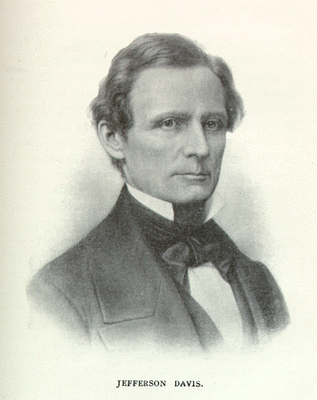
That President was Jefferson Davis, who proclaimed a day of thanks, humiliation, and prayer for the Confederate States of America for October 31st, 1861. Not to be outdone, President Abraham Lincoln resurrected the forgotten day in the United States as well, and issued a similar proclamation in April of 1862. 

In 1863, Thanksgiving was made a national holiday in the United States, and in 1866, the tradition of recognizing Thanksgiving on the fourth Thursday of November was started by President Andrew Johnson. 

In 1939, Franklin D. Roosevelt signed legislation making fourth Thursday in November Thanksgiving Day. From that time on, every sitting President has recognized Thanksgiving as a national holiday. 

Thanksgiving is not just an American holiday. It is a Christian holiday.

But that isn't the whole history of Christian thanksgivings in America. Let's start back at the beginning and move backward.

 
VIRGINIA: In 1607 when the first permanent English settlement was established in Jamestown,
Virginia, Rev. Robert Hunt led the Englishmen in a Eucharist of thanksgiving and praise - consecrating the colony to God.

MAINE: On August 9, 1607, English settlers in Maine under Captain George Popham held a harvest feast and prayer meeting on the Kennebec River with the Abnaki Indians.

FLORIDA: On September 8, 1565, Pedro Menendez de Aviles, a Spanish explorer, invited the Timucua Indians to dinner in St. Augustine, FL, after a thanksgiving Mass celebrating the explorers' safe arrival.

Thanksgiving is not just an American holiday. It is a Christian holiday.

An earlier Florida Thanksgiving was held in 1564 when French Huguenot colonists celebrated near Jacksonville, FL. Prominent Huguenot leader, Admiral Gaspard de Coligny, envisioned America as a refuge for persecuted French Protestants. He sponsored a group of Huguenots to found Fort Caroline on Florida's St. John's River. The settlement struggled, but reinforcements came just in time to save it. On June 30, 1564, the group celebrated their first Thanksgiving Festival.


TEXAS: But the first recorded Thanksgiving was May 23, 1541, in the Texas panhandle when Spanish explorer Francisco Vasquez de Coronado held a service of thanksgiving for finding food, water, and pasture for his animals.


Thanksgiving is not just an American holiday. It is a Christian holiday.

Sources: Andrew Marra, Fred Taylor, Tim Manning, Jack Marlar, Pierre Bynum.

Wednesday, November 25, 2009

Jefferson Davis' 1861 & 1862 Thanksgiving Proclamations

WHEREAS, it hath pleased Almighty God, the Sovereign Disposer of events, to protect and defend us hitherto in our conflicts with our enemies as to be unto them a shield.


And whereas, with grateful thanks we recognize His hand and acknowledge that not unto us, but unto Him, belongeth the victory, and in humble dependence upon His almighty strength, and trusting in the justness of our purpose, we appeal to Him that He may set at naught the efforts of our enemies, and humble them to confusion and shame.

Now therefore, I, Jefferson Davis, President of the Confederate States, in view of impending conflict, do hereby set apart Friday, the 15th day of November, as a day of national humiliation and prayer, and do hereby invite the reverend clergy and the people of these Confederate States to repair on that day to their homes and usual places of public worship, and to implore blessing of Almighty God upon our people, that he may give us victory over our enemies, preserve our homes and altars from pollution, and secure to us the restoration of peace and prosperity.

Given under hand and seal of the Confederate States at Richmond, this the 31st day of October, year of our Lord, one thousand eight hundred and sixty one.

By the President, JEFFERSON DAVIS

THANKSGIVING DAY 1862 for victory in battle

BY JEFFERSON DAVIS

To the People of the Confederate States:

Once more upon the plains of Manassas have our armies been blessed by the Lord of Hosts with a triumph over our enemies. It is my privilege to invite you once more to His footstool, not now in the garb of fasting and sorrow, but with joy and gladness, to render thanks for the great mercies received at His hand.

A few months since, and our enemies poured forth their invading legions upon our soil. They laid waste our fields, polluted our altars and violated the sanctity of our homes. Around our capital they gathered their forces, and with boastful threats, claimed it as already their prize.

The brave troops which rallied to its defense have extinguished these vain hopes, and, under the guidance of the same almighty hand, have scattered our enemies and driven them back in dismay.

Uniting these defeated forces and the various armies which had been ravaging our coasts with the army of invasion in Northern Virginia, our enemies have renewed their attempt to subjugate us at the very place where their first effort was defeated, and the vengeance of retributive justice has overtaken the entire host in a second and complete overthrow.

To this signal success accorded to our arms in the East has been graciously added another equally brilliant in the West. On the very day on which our forces were led to victory on the Plains of Manassas, in Virginia, the same Almighty arm assisted us to overcome our enemies at Richmond, in Kentucky. Thus, at one and the same time, have two great hostile armies been stricken down, and the wicked designs of their armies been set at naught.

In such circumstances, it is meet and right that, as a people, we should bow down in adoring thankfulness to that gracious God who has been our bulwark and defense, and to offer unto him the tribute of thanksgiving and praise. In his hand is the issue of all events, and to him should we, in an especial manner, ascribe the honor of this great deliverance.

Now, therefore, I, Jefferson Davis, President of the Confederate States, do issue this, my proclamation, setting apart Thursday, the 18th day of September inst., as a day of prayer and thanksgiving to Almighty God for the great mercies vouchsafed to our people, and more especially for the triumph of our arms at Richmond and Manassas; and I do hereby invite the people of the Confederate States to meet on that day at their respective places of public worship, and to unite in rendering thanks and praise to God for these great mercies, and to implore Him to conduct our country safely through the perils which surround us, to the final attainment of the blessings of peace and security.

Given under my hand and the seal of the Confederate States, at Richmond, this fourth day of September, A.D.1862.

JEFFERSON DAVIS

Tuesday, November 24, 2009

1778 Congressional Chaplains Thanksgiving Proclamation

The Chaplains of Congress were, on the November 7, 1778, ordered to prepare and report a recommendation to the several States to set apart the 30th day of December following as a day of General Thanksgiving throughout the United States. On the 17th of November, the recommendation was submitted, which being amended, was as follows:

It having pleased Almighty God, through the course of the present year, to bestow many great and manifold mercies on the people of these United States; and it being the indispensable duty of all men gratefully to acknowledge their obligations to him for benefits received;

Resolved, That it be and hereby is recommend to the legislative or executive authority of each of the said States to appoint Wednesday, the 30th of December next, to be observed as a day of public Thanksgiving and praise; that all people may with united hearts, on that day express a just sense of his unmerited favour; particularly in that it hath pleased him by his overruling providence to support us in a just and necessary war, for the defense of our rights and liberties, by affording us seasonable supplies for our armies; by disposing the heart of a powerful monarch to enter into an alliance with us, and aid our cause, by defeating the councils and evil designs of our enemies, and giving us victory over their troops; and by the continuance of that union among these States which, by his blessings, will be their future strength and glory...

And it is further recommended, that, together with devout Thanksgiving, may be joined a penitent confession of our sins, and humble supplication for pardon, through the merits of our Savior, so that, under the smiles of heaven, our public councils may be directed, our arms by land and sea prospered, our schools and seminaries of learning flourish, our trade be revived, and our husbandry and manufactures increased, and the hearts of all impressed with undissembled piety, with benevolence and zeal for the public good...Done in Congress this 17th day of November, 1778, and in the third year of Independence of the United States of America.

These Thanksgiving proclamations are theology lessons. What do these proclamations reveal about the theology of the Founders? Their view of the Sovereignty of God? Of sin? Of Providence? Of redemption? Of law? Of the relationship of government to God? Is your pastor as theologically orthodox as these congressmen?

Monday, November 23, 2009

Henry Laurens' Thanksgiving Proclamation, 1777

Henry Laurens, President of Continental Congress, 1777

Forasmuch as it is the indispensable duty of all men to adore the superintending providence of Almighty God; to acknowledge with gratitude their obligation to him for benefits received, and to implore such father blessings as they stand in need of...it is therefore recommended to the legislative or executive powers of these United States to set apart Thursday the 18th day of December next, for Solemn Thanksgiving and Praise; that with one heart and one voice the good people may express the grateful feelings of their hearts, and consecrate themselves to the service of their Divine Benefactor; and that together with their sincere acknowledgments and offerings, they may join the penitent confession of their manifold sins, whereby they had forfeited every favor; and their humble and earnest supplication that it may please God, through the merits of Jesus Christ, mercifully to forgive and blot them out of remembrance; that it may please him graciously to afford his blessings on the Governments of these States, respectively, and prosper the Public Council of the whole; to inspire our Commanders, both by land and sea, and all under them, with that wisdom and fortitude, which may render them fit instruments, under Providence of Almighty God, to secure for these United States the greatest of all blessings, independence and peace...virtue and piety, under his nurturing hand, and to prosper the means of religion, for the promotion and enlargement of that Kingdom which consisteth in righteousness, peace and joy in the Holy Ghost.

And it is further recommended, that servile labour and such recreation as, though at other times innocent, may be unbecoming the purpose of this appointment, be omitted on so solemn an occasion.

Washington's 1789 Thanksgiving Proclamation

Whereas it is the duty of all nations to acknowledge the providence of Almighty God, to obey His will, to be grateful for His benefits, and humbly to implore His protection and favor; and

Whereas both Houses of Congress have, by their joint committee, requested me to "recommend to the people of the United States a day of public thanksgiving and prayer, to be observed by acknowledging with grateful hearts the many and signal favors of Almighty God, especially by affording them an opportunity peaceably to establish a form of government for their safety and happiness:"

Now, therefore, I do recommend and assign Thursday, the 26th day of November next, to be devoted by the people of these States to the service of that great and glorious Being who is the beneficent author of all the good that was, that is, or that will be; that we may then all unite in rendering unto Him our sincere and humble thanks for His kind care and protection of the people of this country previous to their becoming a nation; for the signal and manifold mercies and the favorable interpositions of His providence in the course and conclusion of the late war; for the great degree of tranquility, union, and plenty which we have since enjoyed; for the peaceable and rational manner in which we have been enable to establish constitutions of government for our safety and happiness, and particularly the national one now lately instituted for the civil and religious liberty with which we are blessed, and the means we have of acquiring and diffusing useful knowledge; and, in general, for all the great and various favors which He has been pleased to confer upon us.

And also that we may then unite in most humbly offering our prayers and supplications to the great Lord and Ruler of Nations and beseech Him to pardon our national and other transgressions; to enable us all, whether in public or private stations, to perform our several and relative duties properly and punctually; to render our National Government a blessing to all the people by constantly being a Government of wise, just, and constitutional laws, discreetly and faithfully executed and obeyed; to protect and guide all sovereigns and nations (especially such as have shown kindness to us), and to bless them with good governments, peace, and concord; to promote the knowledge and practice of true religion and virtue, and the increase of science among them and us; and, generally to grant unto all mankind such a degree of temporal prosperity as He alone knows to be best.

Given under my hand, at the city of New York, the 3d day of October, A.D. 1789.
G. Washington (his actual signature)

What a camel and a Chevy have in common

North African Christian does evangelism on a camel


International (MNN) ― Open Doors USA reports that a man in North Africa has a unique way of sharing the Gospel. He credits his camel for the ability to spread the Good News. (Pictured: a Jordanian bedouin camel driver in Petra in 1999.)

"Thanks to God for creating camels," said the secret believer (a convert from Islam to Christianity). "I want to share the Gospel with others, and I want to encourage them, and my camel is my vehicle which brings me everywhere."

Riding across the North African desert, this man's camel carries him up to 400 miles to visit other believers and share the Gospel. The man converted to Christianity about a year ago and has been rejected by his family for his newfound faith. Meeting with other secret believers has been an encouragement.

"I understand that God has a good plan for my life," he says. "I found other brothers that helped me grow in my faith, and that is wonderful."

Many converts from Islam in North Africa are ostracized like this believer. Often they are shunned by family and relatives and forced to move far away. Using his camel to access remote villages, this secret believer takes the Gospel to the people of the desert.

"My camel is like a Chevrolet in the USA. It brings you everywhere, and it often helps you in generating income."

Unfortunately, this man's camel recently perished as a result of a lack of water and food. Thanks to Open Doors USA, this man was able to continue his traveling ministry and his trading.

"I like to share my spiritual growth with others so they can grow," the believer states. "Please pray for endurance and perseverance for me in times of oppression and persecution."

Open Doors' Muslim World Ministry meets the needs of secret believers like this man by providing Bibles, training in leadership and community development.

You can support this ministry by clicking here.

Sunday, November 22, 2009

John Adams' 1799 Thanksgiving Proclamation

A PROCLAMATION by the President of the United States of America:
As no truth is more clearly taught in the Volume of Inspiration, nor any more fully demonstrated by the experience of all ages, than that a deep sense and a due acknowledgment of the governing providence of a Supreme Being and of the accountableness of men to Him as the searcher of hearts and righteous distributor of rewards and punishments are conducive equally to the happiness and rectitude of individuals and to the well-being of communities; as it is also most reasonable in itself that men who are made capable of social acts and relations, who owe their improvements to the social state, and who derive their enjoyments from it, should, as a society, make their acknowledgments of dependence and obligation to Him who hath endowed them with these capacities and elevated them in the scale of existence by these distinctions;
As it is likewise a plain dictate of duty and a strong sentiment of nature that in circumstances of great urgency and seasons of imminent danger earnest and particular supplications should be made to Him who is able to defend or to destroy; as, moreover, the most precious interests of the people of the United States are still held in jeopardy by the hostile designs and insidious acts of a foreign nation, as well as by the dissemination among them of those principles, subversive of the foundations of all religious, moral, and social obligations, that have produced incalculable mischief and misery in other countries; and as, in fine, the observance of special seasons for public religious solemnities is happily calculated to aver the evils which we ought to deprecate and to excite to the performance of the duties which we ought to discharge by calling and fixing the attention of the people at large to the momentous truths already recited, by affording opportunity to teach and inculcate them by animating devotion and giving to it the character of a national act :
For these reasons I have thought proper to recommend, and I do hereby recommend accordingly, that Thursday, the 25th day of April next, be observed throughout the United States of America as a day of solemn humiliation, fasting, and prayer; that the citizens on that day abstain as far as may be from their secular occupations, devote the time to the sacred duties of religion in public and in private; that they call to mind our numerous offenses against the Most High God, confess them before Him with the sincerest penitence, implore His pardoning mercy, through the Great Mediator and Redeemer, for our past transgressions, and that through the grace of His Holy Spirit we may be disposed and enabled to yield a more suitable obedience to His righteous requisitions in time to come; that He would interpose to arrest the progress of that impiety and licentiousness in principle and practice so offensive to Himself and so ruinous to mankind;
That He would make us deeply sensible that "righteousness exalteth a nation, but sin is a reproach to any people"; that He would turn us from our transgressions and turn His displeasure from us; that He would withhold us from unreasonable discontent, from disunion, faction, sedition, and insurrection; that He would preserve our country from the desolating sword; that He would save our cities and towns from a repetition of those awful pestilential visitations under which they have lately suffered so severely, and that the health of our inhabitants generally may be precious in His sight; that He would favor us with fruitful seasons and so bless the labors of the husbandman as that there may be food in abundance for man and beast; that He would prosper our commerce, manufactures, and fisheries, and give success to the people in all their lawful industry and enterprise;
That He would smile on our colleges, academies, schools, and seminaries of learning, and make them nurseries of sound science, morals, and religion; that He would bless all magistrates, from the highest to the lowest, give them the true spirit of their station, make them a terror to evil doers and a praise to them that do well; that He would preside over the councils of the nation at this critical period, enlighten them to a just discernment of the public interest, and save them from mistake, division, and discord; that He would make succeed our preparations for defense and bless our armaments by land and by sea; that He would put an end to the effusion of human blood and the accumulation of human misery among the contending nations of the earth by disposing them to justice, to equity, to benevolence, and to peace; and that he would extend the blessings of knowledge, of true liberty, and of pure and undefiled religion throughout the world.
And I do also recommend that with these acts of humiliation, penitence, and prayer, fervent thanksgiving to the Author of All Good be united for the countless favors, which He is still continuing to the people of the United States, and which render their condition as a nation eminently happy when compared with the lot of others.
Given, etc.
JOHN ADAMS
1799

Colossians 3:22-4:1 - Christ-centered Labor


Pray and Read:  Colossians 3:22-4:1

Contextual Notes: We are looking at the last of three pairs of commands Paul has given in what many scholars beginning with Martin Luther called the Haustafeln, or household rules. In each one, the group is called to attention, a command given, and then a motivating factor regarding the Lord Christ is involved. Before Paul dealt with close relationships of husband-wife and parents-children. Here we examine the two most distant relationships – employee-employer.
        It is true in the Roman context that slave and master are at issue, but since the putting away of legalized slavery, the principles of employment remain in the text. In fact in the Roman context, the master-slave relationship was more akin to modern day employment than our understandings of the kind of slavery in American and British history.

Key Truth: Paul wrote Colossians 3:22-4:1 to teach the Colossian Christians that Christ-centered laborers are honest servants while Christ-centered employers are fair providers.

Key Application: Today I want to show you what God’s Word says about making your daily employment Christ-centered. 

Sermon Points:
  1. Christ-centered laborers are honest servants (Col 3:22-25)
  2. Christ-centered employers are fair providers (Col 4:1)
Exposition:   Note well,


1.   CHRIST-CENTERED LABORERS ARE HONEST SERVANTS (3:22-25).
a.   22Servants, obey in everything your earthly masters, no in eye-service as people-pleasers, but instead in uprightness of heart, reverencing the Lord.
b.   ὀφθαλμοδουλίᾳ:  literally: eye-service formed from the words for eye and service. This is service only concerned with externals, what can be seen, image or service rendered only under the master’s watchful eye (i.e., only when s/he is watching), or service to attract attention to oneself.[1]
c.   ἀνθρωπάρεσκοι: “a person who tries to please people at the sacrifice of principle”
d.   with sincerity of heart: “i.e. in honesty with no ulterior motives. The motive for wholehearted, obedient service is reverential fear before the heavenly Lord.”
e.   23Whatever you do, work at it with your whole mind, just as for the Lord and not for men, 24knowing that from the Lord you will receive back as a reward your inheritance. The Lord Christ you are to serve.
f.    ἐκ ψυχῆς ἐργάζεσθε: Whatever you do, work at it with your whole mind/soul

g.   25For the wrongdoer will receive the consequence of the wrongdoing, and there is no partiality.
h.   Verse 25 is a true future of a day coming when God will recompense all evil done at the Great Judgment, not a gnomic future of something true generally that will be fulfilled repeatedly.
i.     Προσωπολημψία: partiality, literally: “acceptance of one’s face” a Hebraism of raising the face of a humble suppliant, i.e., to show partiality.

k.   APPLICATION: As an employee, are you a people-pleaser? Do you straighten up and work harder when the boss walks through? Are you a name dropper? Do you look for things to do to bring attention to yourself? Are you upright in your heart when you deal with your employer? Do you cover up things that you should let her know? Do you keep him from knowing things he should? Are you upright in heart with your supervisor?

l.     Your work every day is first and foremost a sacrifice of praise to the Lord. Does your work every day become an occasion of reverence for the Lord? Is your work an act of worship to him? Is your craftsmanship a testimony to what the Lord has done in your heart? Or are your sales a product of your own bait and switch plan to make money?

m. There is a Day coming when the Lord will deal back to you every deceptive comment you made to your supervisor, every dirty deal you sent up the food chain, every show you put on to fool a customer, everything you have done to make sure your work was done with integrity, every time you owned up to the blame and offered to make it right at no cost to your company, every time you told the truth when it hurt your chances for promotion.

2.   CHRIST-CENTERED EMPLOYERS ARE FAIR PROVIDERS  (4:1).
a.   1Masters, provide to your servants what is just and fair because you know that you also have a Master in heaven.

c.   APPLICATION: As an employer are you treating your employees fairly? Are you treating them equally? Are you paying the women on your team the same you pay the men with the same seniority doing the same work? Are you careful to make sure that merit increases are fair and just? Do you have a favorite employee that gets the gift cards the salesmen leave? Do you take out your frustration on the employees who won’t talk back to you? Are you fair to all of them when the bonuses are distributed? Do you look away when certain people cross the line and hold others to a higher standard? Do you look at yourself as a provider that God has enabled to serve your laborers, or do you look for every opportunity to take advantage of a group of people who ought to be glad they get a paycheck each week? Those people have families to feed and house and clothe, and as an employer, you have a responsibility before God. You have a Master in heaven.


[1] Murray Harris, 182.

Colossians 3:18-21 - Christ-centered Family


Opening thoughtToday’s passage is not an easy one to preach. We all live here every day, and we all succeed and fail here every day. It is the area of the family.

Pray and Read:  Colossians 3:18-21

Contextual Notes: Colossians is about one important thing: growing deep as a disciple of Jesus Christ (Col 2:6-7). Since the beginning of Colossians 3, Paul has taught that setting one’s heart on things above where Christ is seated involves putting off sins of the body, mind, and spirit and putting on the garments of Christlikeness both outwardly and inwardly with thanksgiving. In fact, in whatever we do, whether in word or deed, he says (3:17), we should do it all in the name of the Lord Jesus with an attitude of thanksgiving.
        Without a real transition, Paul charges into the importance of being a Christ-centered family. The Bible teaches us that God has established three institutions: government, the church, and underlying both of them the family.[1]
        Notice that from 3:18-4:1 there are three pairs. The first two pairs involve family, and we will look at them today. Note that each group is addressed, then an imperative command, then a motivation for each one. Note also that Paul begins with the closest and most important relationship and moves outward to other relationships, ending with slaves and masters. Each one of these three pairs do not stand independently but should be interpreted with its pair.
        This section demonstrates that to set one’s eyes on things above means not to separate from the world but to have a wholehearted commitment to the daily duties of this world for the sake of the Lord.

Key Truth: Paul wrote Colossians 3:18-21 to teach the Colossian Christians to be Christ-centered families.

Key Application: Today I want to show you what God’s Word says about Christ-centered families.

Sermon Points:
  1. Christ-centered wives are submissive (Col 3:18)
  2. Christ-centered husbands are loving and tender (Col 3:19)
  3. Christ-centered children are obedient (Col 3:20)
  4. Christ-centered fathers are encouragers (Col 3:21)

Exposition:   Note well,

1.   CHRIST-CENTERED WIVES ARE SUBMISSIVE (3:18).

a.         Hupotasso: “be subject”: be submissive

b.         This apostolic command does not imply inferiority of the wife (see O’Brien 220-222), Ephesians 5:21 commands mutual submission within the church. Here is a case of voluntary submission in recognition of the God-appointed leadership of the husband and the divinely ordained order in creation (1 Cor 11:3, 7-9; Eph 5:22-24).[2]

c.         Actually, because Paul followed Jesus in believing that women were equal in value and responsibilities to men (Col 3:11; Gal 3:28), it is good for him to bring clarity to God’s ordained function for the family.

d.         As is fitting in the Lord: there is a limit. That is, if there is physical or other abuse, then that submission is not fitting in the Lord.

f.          APPLICATION: Wives, how are you doing in this area? Do you run your household? Or do you voluntarily, lovingly submit yourself to your husband’s leadership? Do you have enough security in yourself to do that?

g.         Notice also that there is a limit to submission. It is “as is fitting in the Lord.” Some limits of submission are not fitting in the Lord. Wives, if you are being abused physically or verbally by your husband, there is a limit to submission for you and your children. If your husband is such a man, then let me tell you what you should do when the threat presents itself. You pick up the phone and dial 9-1-1. Let the sheriff’s deputy come and arrest him. Let him sit a night at taxpayer expense to think about what he did. Let his name and picture be in the paper on Monday, and in most cases he will come home with an attitude adjustment. And men, if you are unwilling to be a decent husband and father, that is the least that you are due. If you are too sorry to take care of your home and love your family, then you should pay the consequences.

2.   CHRIST-CENTERED HUSBANDS ARE LOVING and TENDER  (3:19).

a.         “Maintain the habit of loving,” “make it your practice to love.” Paul has already referred to putting on love as a garment (Col 3:14), so in this context husbands should love their wives.

b.         ἀγαπᾶτε: not affection (phileo), not sexual attraction (erao), but selfless love, unceasing care and loving service for her entire well-being. It is a love that is sacrificial, that disregards itself, defined by the way Christ gave Himself for the church. This is a shocking thing to say considering the fact that in Greek society wives were chattel property. Love your wives? Amazing. God must really value women.

c.          “do not embitter them,”  “be sharp,” “show bitterness,” Or likely “stop being embittered,” “avoid bitterness toward them.”
d.         If a husband follows this command, he will not behave in an overbearing manner. All areas of his married life will be characterized by this self-giving love and forgiveness.[3]

f.          APPLICATION: Husband, are you embittered by your wife? Are you loving her sacrificially, or are you tolerating her hoping she will forget about those things you have not done or will not do or have done. She won’t forget. Choose to love her. Love her sacrificially. Be tender toward her. Your job is not to be overbearing and dominate her. If that is your brand of husbandry, you aren’t much of one. If you will simply love her and be tender toward her, she will serve you and love you and be committed to you.

3.   CHRIST-CENTERED CHILDREN ARE OBEDIENT (3:20)

a.         “obey,” “be subject” “in all respects”
b.         It is pleasing or acceptable to the Lord

d.         APPLICATION: Children and teens, are you obedient to your parents? Are you constantly looking for an opportunity to outsmart them and circumvent their boundaries for you? Don’t you realize that they love you more than life? Your parents do not hate you. They are looking out for your best interest. Honor them by being obedient. Your level of obedience is an objective indicator of the level of Christlikeness in your life.

e.         Some of you did raise your children well, but their behavior does not indicate that you did anything right. You did everything you knew to do to rear them well, but they did not respond well. Today they live lives in rebellion to God. That is not ultimately your responsibility. Each child is responsible before God for their actions, and the environment you provided for them you are responsible for. You cannot carry false guilt for the willful disobedience of your children. You can pray for them and continue to love them, but you cannot make them be obedient to Christ.

4.   CHRIST-CENTERED FATHERS ARE ENCOURAGERS (3:21)

a.         “do not arouse, excite, provoke, irritate, exasperate.” (1 Cor 9:2 only other NT use)
b.         May be “fathers” or by synecdoche, “parents”
c.         In order that they might not be “discouraged, despondent, lose heart, lack spirit. Literally: no-spirit, desire.

e.         APPLICATION: Fathers have authority. They can use it through their own insecurity to hammer their children into submission, or they can be encouragers, giving their children a wonderful place to grow up. Perhaps your children are having a hard time being obedient because you have beat the life out of them. You don’t use your authority to provide a safe, encouraging place to grow up. Your home is an overbearing prison that stifles the life out of your kids. Make your home a place that they can be who God created them to be, and they can grow up healthy and focused on Christ. Then you will have done well.

Invitation: Today the Holy Spirit may be working in your heart and teaching you, encouraging you, rebuking you, or training you in righteousness. Will you respond to Him today? Will you make a commitment to be that wife, that father, that mother, that child that is Christ-centered?

Sources:
Murray J. Harris, Exegetical Guide to the Greek New Testament: Colossians and Philemon. Grand Rapids: Eerdmans, 1991.
Peter O’Brien, Word Biblical Commentary, Vol 44: Colossians, Philemon. Waco: Word, 1982.


[1] This is the most ancient list in NT and pagan Greek literature of what Martin Luther calls, Haustafeln, or household rules, so the argument that this is a list brought over from Stoicism does not hold water. It does, however, have links to OT teaching. After all, Paul was a rabbi.

[2] Murray Harris, 178.

[3] O’Brien, 223.

Sunday, November 15, 2009

Colossians 3:12-17 - Enrobed in Christ


Opening thoughtI was standing in a dusty parking lot in Amman, Jordan, with nine women from Duplin County, NC, renting a van to drive down to Petra, when the rental guy warned me to “Watch out for beasts in the desert!” I didn’t know what he was talking about, but later that night in the desert a taxi in front of us hit a wild donkey. The stress of all the wind, the sand, the dark, and the wild donkey made me understand that the beast was not in the desert, it was inside me! I needed to put off my sinfulness and put on Christ. Today’s passage focuses on just that, putting on Christlikeness.

Pray and Read:  Colossians 3:12-17

Contextual Notes: Paul’s letter to the Colossians is about being “In Christ,” centering your life on Him (3:1-4) and growing deep in Him (2:6-7). Today’s passage puts us in the midst of that reality. Last week we looked at 3:5-11, where Paul encourages the Colossian believers to put off the sins of the body, the mind, and the mouth/spirit. Verses 5-11 direct the listener from outward to inward, but in this passage about putting on Christ, Paul uses a tight ABBA construction moving from outward to inward back to outward. Verses 12-14 call for putting on attributes of love like garments of outward beauty. Verse 15 encourages that the peace of Christ to rule in our hearts, ending with an admonition to thanksgiving. Then verse 16 begins inwardly with the word of Christ dwelling in the believers corporately moving outward in verse 17 to do all outward words and deeds in the name of Christ, ending again with an admonition to thanksgiving.

Key Truth: Paul wrote Colossians 2:16-23 to teach the Colossian Christians to dress themselves in Christ’s love, live in Christ’s peace, dwell in Christ’s word, and do all in Christ’s name.

Key Application: Today I want to show you what God’s Word says about being enrobed in Christlikeness.

Sermon Points:
  1. Dress in Christ’s love (Col 3:12-14)
  2. Live in Christ’s peace (Col 3:15)
  3. Dwell in Christ’s word (Col 3:16)
  4. Do all in Christ’s name (Col 3:17)

Exposition:   Note well,

1.   DRESS IN CHRIST’S LOVE (3:12-14).
a.   12Therefore clothe yourselves, elect of God, holy and beloved, with tender mercy, kindness, humility, gentleness, and patience, 13holding yourselves back from one another, and forgiving each other should anyone have a complaint. Just as Christ forgave you, so also you.14And upon all these things [put on] love which is the bond of perfection.”

b.           Paul takes the figure of the “new man” as the “new garment.” NIV: “clothe yourselves.”

c.           Compassion towards the miserable; Kindness toward loved ones and friends; humility to those in authority over us and those who serve us; Meekness toward those who have provoked or injured us; Patience toward those who continue to provoke us; Mutual forbearance considering the weaknesses and deficiencies in all of us; Readiness to forgive and move on; Because Christ forgave us.[1]

d.           Ephesians 4:34; Matthew 5:23-24; 6:14

e.           Verse 14: Here love is the girdle or belt that holds all the garments together.[2] Or perhaps the robe covering all.

f.            ILLUSTRATION: I have heard preachers say that their church wouldn’t be so bad if it weren’t for the people in it! Church is people, and therefore churches are never perfect.

g.           APPLICATION: We often seem so surprised when people have disagreements in church because we are supposed to be holy. But this passage from the Bible today assumes that people in church will have disagreements and conflict. We should expect disagreement and conflict. Paul, Barnabas, and John Mark had a disagreement. Peter and Paul had one, too. The difference for Christians is how we handle that disagreement and conflict. The key is to keep our eyes centered on Christ, not on self.

2.   LIVE IN CHRIST’S PEACE  (3:15).
a.           15And let the peace of God act as umpire in your hearts, into which you were also called in one body. And keep on becoming thankful.”

b.           ILLUSTRATION: On the baseball diamond, the umpire’s word goes. Let peace have that authority among us. Let the word of peace go among us. The Moravians had a maxim that is good for all of us: In essentials, unity; in non-essentials, liberty; in all things, charity.

c.           APPLICATION: Appeal to peace and thankfulness as your objective in working with others in the church. As long as there is no compromise in the essential doctrines like the divinity of Christ and his death and bodily resurrection, then let peace reign.

3.   DWELL IN CHRIST’S WORD (3:16)

a.           “16Let the word of Christ make its home in you richly in all wisdom, teaching and admonishing one another with psalms, hymns, and spiritual songs, singing with grace in your hearts toward the Lord.”
b.           Some scholars compare the psalms to the Greek verb psallo which means music with instrumentation. They say hymns are songs sung to Christ and spiritual songs are extemporaneous music in praise to God. Some go further and say they apply to Father, Son, and Holy Spirit.


c.           APPLICATION: The point Paul makes here is that we should be growing deep in Christ’s word. We should be at home in his Word, so much that it comes back out of us in music and song. Similarly, music is a very effective way to get the Word of God into children. They learn the Word through learning it in music. Teachers, families, are you growing your children in God’s word? Are you growing in God’s word? One way to answer that question is to ask yourself if you find yourself singing praise to God often or not at all. If you don’t ever find yourself singing praise to him, then there is an indication that you are not growing in His word.

4.   DO ALL IN CHRIST’S NAME (Col 3:17).
a.   “17And everything whatever you do, in word or in work, [do] all in the name of the Lord Jesus, giving thanks to God the Father through him.”

b.   Application: Your work and your tongue reveal your inward integrity. So how’s that going for you? Does your quality of work and the produce of your mouth reveal a life of thanksgiving or complaining and murmuring? Do they reveal a life centered on your Lord Jesus or on your own pitiful self?

Invitation: Today is the day to make a commitment to enrobe yourself in Christ. Whether it is to receive Jesus as Lord today or to commit to put off the old man with its ways and put on Christlikeness like you would a robe. Would you respond to him today?


[1] Matthew Henry.

[2] A.T. Robertson. Murray Harris disagrees, 164.