Thursday, December 29, 2011

Psalm 28 - A Prayer for Help

English: Dancing for Joy Dancing waves at Ingo...

Have you ever been in a fix and did not know the way out? Have you needed wisdom and skills for dealing with a huge challenge ahead of you? Has it seemed like God was not listening, as if He had better things to do with His time?

Be encouraged. God sees you and hears you. He can renew your intimacy with Him. He can draw you close to Himself. (He was not the one who moved, by the way!) Start by taking your eyes off the problem and raise them to the Lord. Pray the Scripture. Praise Him for his loving care for you. Call on Him who his your rock, your mercy, your holiness, your grace, your justice, your strength, your shield from danger, your help, your faithfulness, your protection, your calm and loving Shepherd. Try Psalm 28 on for size.

Sunday, December 25, 2011

Luke 2:1-20 - The Birth of Jesus

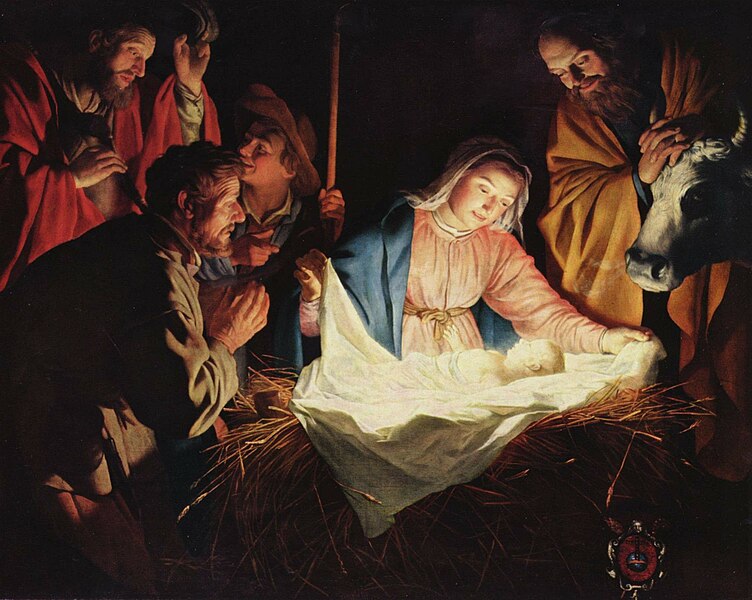
Adoration of the Shepherds (Gerard Van Honthorst)
Contextual Notes:
Luke's Gospel has a developing pattern with a theological message. From the announcement in the Temple at Jerusalem of John’s birth, received by the priest Zecharias in unbelief (Luke 1:5-25), we see the announcement in an insignificant town of Nazareth of Jesus’ birth, received by the virgin Mary in belief (Luke 1:26-38). Mary’s Magnificat celebrates the coming prophetic fulfillment of the Covenants in the Lord Jesus (Luke 1:46-56). John’s birth creates expectation in the countryside (Luke 1:57-66), and Zecharias’ Benedictus celebrates the Messiah to come (Luke 1:67-80).

Luke wants us to see Jesus’ birth as greater than John’s. In Luke 2:1-7, the Messiah is born six months later (John 1:26) extraordinarily of a virgin, yet in insignificant town overlooked by the importance of the Registration. Then heaven lights up with a royal birth announcement and an angelic “Gloria in excelsis Deo” to the most insignificant of people, a group of shepherds minding their own business (Luke 2:8-14). Their discovery of the baby and spreading of the news creates excitement and expectation in the countryside. But Mary treasured it all in her heart (Luke 2:15-20).

Key Truth: Luke wrote Luke 2:1-20 to teach believers about the humble birth of the glorious Messiah.
Key Application: Today I want to show you what God’s Word says about Jesus’ birth.
Key Verse: Luke 2:14
Pray and Read:  Luke 2:1-20

Sermon Points:
1.   The humble entrance of a glorious Savior (Luke 2:1-7)
2.   The humble hearers of a glorious Announcement (Luke 2:8-14)
3.   The humble proclamation of a glorious Birth  (Luke 2:15-20)

Friday, December 23, 2011

The Promise of a Seed

We see in Galatians 3:16, that Paul understood the promise of a Seed was the focus of the Covenant. That singular seed, Paul said, was Christ. But Paul's idea was not original with him. The Seed had been promised from the time of the Fall in the Garden.

Thursday, December 22, 2011

Psalm 27 - Seeking Him in the Battle

Psalm 27 is a page out of a warfare manual.[1] It is first of all prophetic of the warfare of JesusPassion. This psalm is of a soldier seeking God and abiding in Him in the thick of battle. Pray Psalm 27 when you are in the midst of the battle.

Note those involved:


Psalm 27:1 - The Lord. Lord, you are the light of wisdom and assurance. You are the source of salvation and trust and confidence. You are the secret place of safety. You banish fear and give strength to the weary and protection for the weak. Because of your character, let me fear nothing and no man.

Sunday, December 18, 2011

Luke 1:57-80 - The Birth of John and the Benedictus

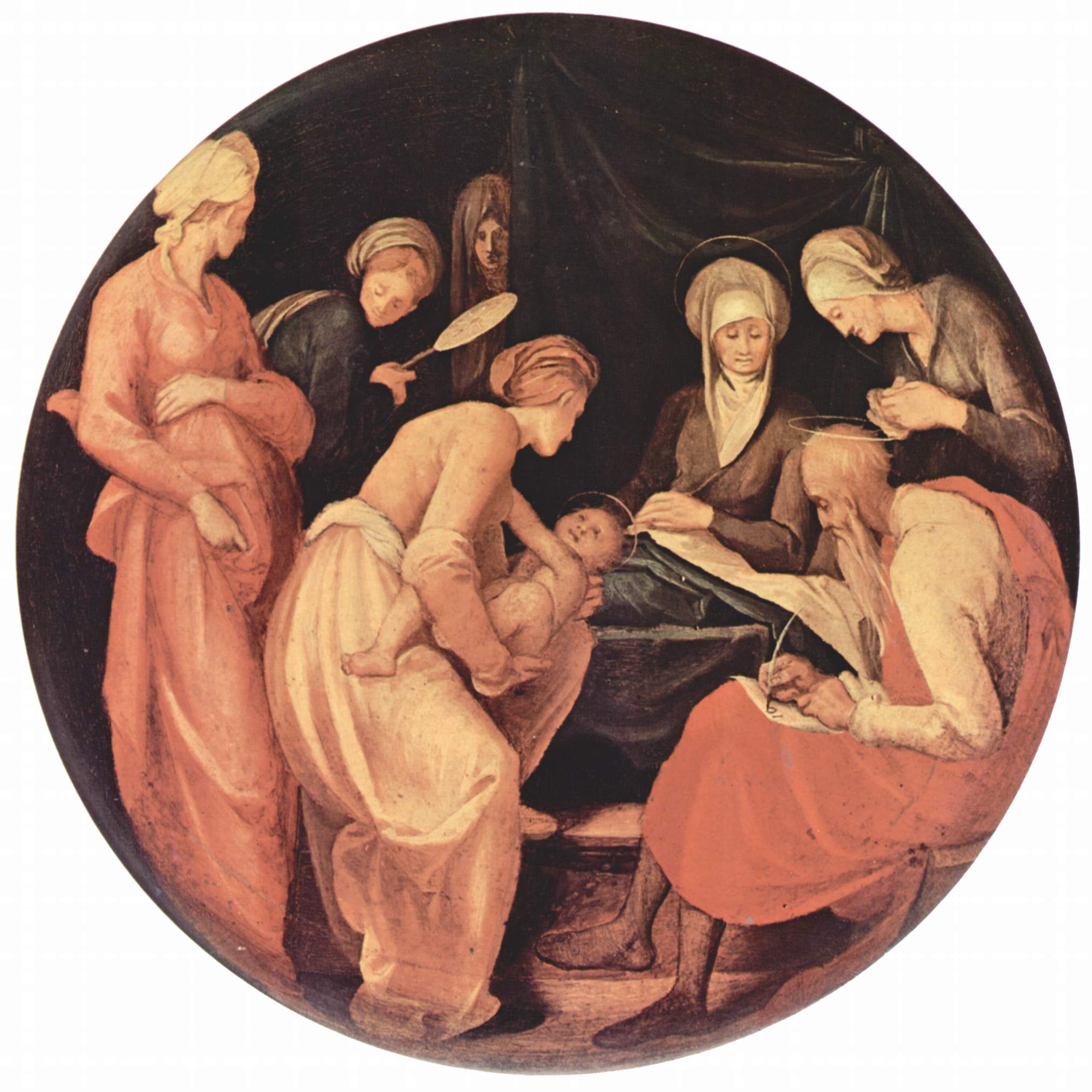
Zecharias writes John's Name (Jacopo Pontormo)
Contextual Notes:
So far in Luke we have seen enough to see a pattern coming into play. From the announcement in the Temple at Jerusalem of John’s birth, received by the priest Zecharias in unbelief (Luke 1:5-25), we see the announcement in an insignificant town of Nazareth of Jesus’ birth, received by the virgin Mary in belief (Luke 1:26-38) and a Magnificat poem of praise, celebrating the coming prophetic fulfillment of the Covenants in the Lord Jesus (Luke 1:46-56).

Today we will see the unusual circumstances of John’s birth and the sense of expectation his birth created in the countryside (Luke 1:57-66), ending with another poem of praise, Zecharias’ Benedictus, layered with prophecy of the Messiah to come (Luke 1:67-80).

Key Truth: Luke wrote Luke 1:57-80 to relate the birth of John and lead believers to an expectation of a coming favor and to praise the Lord for a coming salvation in Messiah.
Key Application: Today I want to show you what God’s Word says about the birth of John.
Key Verse: Luke 1:60, 63
Pray and Read:  Luke 1:57-80

Sermon Points:
1.   John’s birth foreshadows the Messianic Expectation of a Coming Mercy (Luke 1:57-66)
2.   John’s birth foreshadows the Messianic Promise of a Coming Salvation (Luke 1:67-80)

Thursday, December 15, 2011

Psalm 9 - My Part and God's Part


Think about the challenges that have been laid before you. Family challenges. Financial challenges. Workplace challenges. Health challenges. Relationship challenges. And then there are the challenges that you have brought on yourself. Did you know that the Lord is sovereign, too, over those challenges, all those challenges? 

If He is sovereign, then it means He is in charge. If He is in charge, then that means He has taken responsibility for them. If He has taken responsibility for them, then He has adequate resources to take up and handle those challenges. Now the question is, do you trust Him to take responsibility for your challenges? Or would you rather handle them on your own?

Sunday, December 11, 2011

Luke 1:26-56 - The Birth of Jesus Foretold

Angel Gabriel's Annunciation to Mary, by Muril...
Angel Gabriel's Annunciation to Mary, Murillo, c. 1655
Contextual Notes:
Immediately following the angel Gabriel’s announcement of the Forerunner John’s birth to a priest in the Temple (Luke 1:5-25), Gabriel appears again, this time to a virgin named Mary, and this time he announces the birth of the Messiah Himself (Luke 1:26-38). Then the two expectant women, Elizabeth and Mary, celebrate the joy of the coming Messiah (Luke 1:39-45), and Mary’s Magnificat sounds forth the magnificent praise of the Messiah’s fulfillment of the Abrahamic Covenant (Luke 1:46-56).

Key Truth: Luke wrote Luke 1:26-56 to teach believers that the birth of the Messiah would signal the beginning of the fulfillment of God’s Covenant with Abraham, David, and Israel.
Key Application: Today I want to show you what God’s Word says about Jesus’ birth announcement.
Read:  Luke 1:26-56

Sermon Points:
1.   The Annunciation unveils the fulfillment of the Davidic Covenant (Luke 1:26-38).
2.   The Holy Spirit unveils the inauguration of the Renewed Covenant (Luke 1:39-45).
3.   The Magnificat unveils the fulfillment of the Abrahamic Covenant (Luke 1:46-56).

Saturday, December 10, 2011

Surprise at the church Christmas party!

The church ladies' mission society was surprised and thrilled to have the Holy Spirit as their special guest at their annual Christmas party. He apparently answered Sister Sadie's prayer inviting him for the first time. A resolutions committee is now considering a society-wide vote to invite the Lord on an annual basis.

Friday, December 09, 2011

Persecution in Iran and India

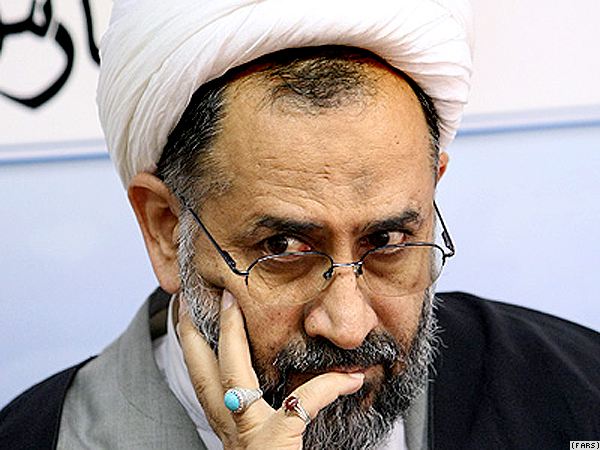
Heydar Moslehi
House churches "a threat to youth"
IRAN - It seems that the gloves are finally off. Iran's Minister of Intelligence Heydar Moslehi calls house churches "a threat to youth." He also says they're working to stop the growth of Christianity

Only 2-3 years ago, the government ignored the Church. Now, because of a great awakening in Iran, they feel threatened because so many people are coming to Christ. 

Although Iran is arresting believers under the apostasy law, Christmas season usually brings a yearly spike in persecution. Why? Christians are celebrating. They are sharing the Gospel and the Christmas story. 

Prayer is needed. This is yet another confirmation of what an incredible work God is doing in Iran." Full story here


Seven newly baptized converts from Islam detained, beaten
English: Seal/crest of the Church of North India

INDIA – Police in India’s Kashmir Valley detained and beat 7 newly baptized Christians who converted from Islam, and they are seeking the arrest of the Christian leaders responsible for converting them. 


Police identified the converts and pastors from a video recording of the baptism posted on YouTube and obtained by Kashmir's grand mufti (the highest official of Islamic law), Bashir-ud-din Ahmad. 

Ahmad alleged that Pastor Chander Mani Khanna of All Saints Church (Church of North India), was bribing young Muslims to convert, saying that the video, showing only the baptism ceremony) proves Muslims are being "lured" to Christianity. 

The pastor said the Muslim youths attended the church on their own initiative and asked to take Communion. Pastor Chander told them they must be baptized to join the Supper, and they asked for baptism. 

Pray that Pastor Chander will not be charged, and that the young converts will remain steadfast in their faith. Pray that the gospel will spread throughout Kashmir despite opposition and oppression.

Thursday, December 08, 2011

Psalm 107 Everyone needs redemption

Psalm 107 is a passage of thanksgiving for redemption. There is no real parallel concept in Hebrew to our English word thanks or thanksgiving

The word often translated give thanks[1] means literally, “to make known publicly,” and to acknowledge. It is a public confession of God’s character and works (Psalm 107:1-3).

Thanks is all we can give him, Charles H. Spurgeon said, and it is the least we can give him.

Then in a series of vivid images, the psalmist contrasts the lost state with the release that redemption brings (Psalm 107:4-32). Everyone needs redemption. 

Tuesday, December 06, 2011

Send Christmas cards to imprisoned, persecuted believers

Send a Christmas card to a believer among the Persecuted Church. Your words are never wasted when it comes to writing a letter to our brothers and sisters of the persecuted Church. Mail sent by concerned believers can have a profound impact on those who are suffering and even on their persecutors.  You can be an encouragement by sending a card or a letter to bring them hope. 

Your letters to prisoners can do five things:
1.       Provide tremendous encouragement. Letters touch our persecuted brethren right where they are, demonstrating that they're not forgotten and that someone somewhere cares for them and is praying for them.
2.       Indicate to authorities that you are aware of a Christian’s situation, and you care!
3.       Testify of the love and unity found among followers of Jesus Christ worldwide. This is especially true when letters are opened and censored. God can use your letter to work in the lives of those in authority.
4.       Prove our persecuted family is not forgotten. Through isolation and loneliness, the devil can prey on imprisoned Christians’ faith. When a prisoner receives a letter, whether they can read it or not, they know someone cares.
5.       Lead to better treatment of Christian prisoners. Prison officials and government authorities know someone is watching them.

Sunday, December 04, 2011

Luke 1:1-25 - Birth of John Foretold

Annunciation to Zecharias
Opening thought
We often send birth announcements when a new baby arrives. In the case we have today, the birth announcement comes before the baby’s conception.

Contextual Notes:
Matthew and Luke are the two of the four Gospels which record the infancy of the Lord Jesus. Mark and John wait to introduce him at the beginning of his public ministry. In Matthew, the main focus is Joseph, while in Luke, the private experiences and sayings of Mary are given in detail. After a brief introduction (Luke 1:1-4), Luke explains the events of the birth of Jesus (1:5-2:52).
In Luke’s day, more sophisticated writers introduced their works with stylish prose written in classical style. Luke does this superbly, demonstrating that he was very well educated. Luke begins his gospel with a formal address, balanced in form, and classical in language, to a Theophilus, one continuous sentence with six main clauses, the first three balancing the second three. These verses stand in marked contrast to the rest of the Gospel, written in a more Semitic style close to the way those who lived and witnessed it retold and related the story of Jesus.
Luke is the only one of the four Gospel writers who did not know the Lord while he was physically on the earth. He was not present during Jesus’ ministry, death, or resurrection.
Theophilus – He could have been a wealthy Greek who wanted to know the truth of Jesus or a pseudonym for a public official. The name means “friend of God.” The use of “most excellent” suggests a person equestrian status.
Luke presents an orderly account of eyewitness accounts (Luke 1:2) from those who were with Jesus: his family, friends, and disciples. Luke says he is not the first to record Jesus’ life (Luke 1:1).He does not claim to be an eyewitness, as a forger would, so his words reinforce the genuineness of his text. This most personal of the four gospels is the most universal. Like for Theophilus, the gospel is for you.
After that grand prologue (Luke 1:1-4), Luke begins with the announcement of the birth of the forerunner of the Messiah, John, and he starts in the heart of the promises of the OT, the place of intercession before the Holy of Holies inside the Temple.

Key Truth: Luke wrote Luke 1:1-25 to explain to believers how God planned birth announcement of the forerunner to the Messiah.
Key Application: Today I want to show you what God’s Word says about
Pray and Read:  Luke 1:1-25

Sermon Points:
1.   Renewal of God’s Covenantal Promise (Luke 1:5-12)
2.   Renewal of God’s Covenantal Calling (Luke 1:13-17)
3.   Renewal of God’s Covenantal Favor (Luke 1: 18-25)

Thursday, December 01, 2011

Pray the Beatitudes

Site of Sermon on the Mount
Matthew 5:1-10

In the Abrahamic Covenant (Genesis 12:1-3), the Lord promised Abraham He would bless him and make him a blessing to the nations. The New Covenant in Jesus’ blood incorporated the Abrahamic Blessing yet also initiated a radical new order of blessing and blessedness. 

The Beatitudes are the first words of the first teaching (torah) of the Messiah in the first book of the New Testament. These words of blessing are the first royal pronouncement of this King in Matthew. The Great Commission is the final royal command to be a blessing to the nations (Matt. 28:18-20). In the Beatitudes our Lord goes up on a mountain (Psalm 24:3; Heb 12:18, 22) and sits down (Heb 1:3-4) to teach with royal authority and inaugurates the new way of the Kingdom of Messiah which we are called to seek above all else (Matt. 6:33).  The Beatitudes are Kingdom promises of blessing conditional on obedience to the King. When we walk in obedience to our King, we are promised royal blessedness as He molds us into the character of the Son. 

Pray the Beatitudes by following the link below: