

Friday, July 30, 2010


Tuesday, July 27, 2010
Manse Jolly of Anderson, SC
Rev. John Weaver of Georgia tells stories about Confederate soldier Manse Jolly of Anderson, S.C. during a lunch at the National Reunion for the Sons of Confederate Veterans at the Civic Center of Anderson.
Sunday, July 25, 2010
Isaiah 24-25: Judgment saves!
 |
| Isaiah - Orthodox Church of America icon |
If left to grow, the cancerous areas will kill you. If the cancer is destroyed, then you have a greater chance at a longer and more productive life. In a strange way, cleansing judgment on the cancer would bring the saving of life. Today’s lesson from Scripture is about this kind of irony, that in God’s judgment is salvation.
Contextual Notes: Isaiah’s focus now shifts, as he looks beyond the immediate future in the life of the kingdom of Judah (chs. 1-12) and the judgment coming on the surrounding nations (chs. 13-20). In each section, Isaiah's main themes are that judgment is coming, but there is a Messiah who saves. Now Isaiah sees the divine judgment in a broad, general way (chs. 24-27).
Scholars call chapter 24-27 the Isaiah Apocalypse, paralleling it with the Revelation. Isaiah’s message is that history moves purposely toward God’s intended goals. Judgment on all the nations will come (ch. 24) and the Lord will triumph over all (ch. 25). He will raise the righteous (26:1-19), and exalt Israel in the last days as he promised from the beginning (26:20-27:13).
Scholars call chapter 24-27 the Isaiah Apocalypse, paralleling it with the Revelation. Isaiah’s message is that history moves purposely toward God’s intended goals. Judgment on all the nations will come (ch. 24) and the Lord will triumph over all (ch. 25). He will raise the righteous (26:1-19), and exalt Israel in the last days as he promised from the beginning (26:20-27:13).
The two chapters before us today teach us that God is the Judge of the whole world, and he will punish sin (ch. 24). We can praise God because his judgment on the nations means the salvation of Israel and the triumph of God over evil (ch. 25).
With irony we don’t hear much these days, Isaiah declares that the coming judgment means salvation (24:17; 25:9). Often God must destroy our illusions of man so that he can see the reality of God.
Pray and Read: Isaiah 24-25
Key Truth: Isaiah wrote Isaiah 24-25 to teach Israel that the Judgment is coming, cleansing the earth of evil, and salvation is coming, overcoming death.
Key Application: Today I want to show you what God’s Word says about judgment and salvation.
Sermon Points:
- Judgment is coming, cleansing evil (Isaiah 24)
- Salvation has come, overcoming death (Isaiah 25)
Exposition: Note well,
1. JUDGMENT IS COMING, CLEANSING EVIL (Isaiah 24)
a. Note on Isaiah’s Apocalypse: Some who call these three chapters Isaiah’s Apocalypse claim that apocalyptic literature was not developed until after the Exile, and therefore this passage could not have been written by Isaiah. There are some problems with their argument here. First, there is no sharp distinction between prophetic and apocalyptic literature. Prophecy looks at the end time-future with an historic focus on specific nations and peoples, while apocalypse is less specific, painting broad strokes of cosmic significance. The problem is that Isaiah 24-27 has elements of both forms and cannot be placed squarely in either category. Its mixture of elements and lack of full-tilt apocalyptic flavor points instead to an older, pre-exilic, Isaianic authorship.
b. 24:1-6: Universal judgment: The coming judgment affects everyone, whatever their social status or portfolio (24:2). Wealth and position cannot protect against God’s punishment of sin. The Earth’s surface will be twisted and ruined (24:4), perhaps by drought (24:7).
c. APPLICATION: It is futile to look for security in this world when this world itself is totally vulnerable to God’s coming judgment.
d. 24:5: Everlasting covenant: While some see this as the covenant with Noah not to destroy the earth with a flood (Gen. 9:11-17; Isaiah 24:18; cf. Gen. 7:11), it is much more. The covenant with Noah was the last one with the Gentile nations. That covenant implied human moral responsibility. It makes human beings responsible to God to account for shed blood (9:4-6). Therefore it is not the OT Law of Moses. These are natural moral laws God set in place to govern life, expressed in the human conscience, embedded in human nature. Paul refers to it in Romans 2:12-16.
e. The curse rests on all creation (Rom. 8:19-21). Man has broken God’s holy covenants governing the family, morality, preservation of life, and true worship. All have sinned. All are covenant breakers. Yet God is faithful to his Noahic and Abrahamic covenants by preserving a remnant.
f. Things that defile the land: Defilement is . The Bible tells us that several things defile the land. Ezekiel 3:18-20
i. Idolatry B Exod. 20; 34:5-14; Lev. 19:31; 18:10-12; Deut. 12:2-3; 18:10-12; Judges 2:1-3; 1 Kings 14:15ff; 15:11-15; 2 Kings 17:9-13; 23:3ff; Jer., 7:21-26, 30 (witchcraft); 16:18
ii. Bloodshed B Gen. 4:8-12; Num. 35:33-36; Psalm 79:1-3 (martyrs); Isa. 59:2-3; Jer. 7:6; Hab. 2:12; Jer. 22:17
iii. Sexual immorality B Lev. 18, esp.:24-25, 28, 30; Jer. 2; 3:1-10; 7:6
iv. Breaking covenant B Isa. 24:4-6; Jer. 3:1. Also bribes/ covenant: (Exod. 23:8; Deut. 16:19; Psalm 26:10); cursing the House of God: Psa. 74:7
v. Injustice or Oppression B Prov. 23:11; Amos 1
g. 24:14-16a: Praise: The praise is uttered by the survivors of judgment, and are redeemed Israel and believing Gentiles. Revelation also intersperses great praise with terrifying visions of judgment. They raise a song celebrating his glory just as Moses did (Exod. 15:1-18). The redeemed of Israel praise his glory.
h. 24:20-22: The Great Tribulation. 24:23: The Millennium
i. 24:21-23: Punishing the powers: The Hebrew word seba’ is used of both heavenly bodies and angelic armies (1 Kings 22:19; 2 Chron 18:18). Here spiritual beings, fallen angels, demons are being punished (2 Pet. 2:4; Rev. 19:20-21; 20:10). The entire cosmos, the heavens and the earth, the visible and invisible are being judged and cleansed. Then the Lord will reign (Millennium) gloriously (24:23) John saw this same vision in Rev. 4:10; 5:8-14.
j. APPLICATION: The dark world of the spirit realm is interested in the power that is involved with human governments, and demonic forces are influencers in those governments. This passage (24:21-23) tells us that. God’s judgment will cleanse all the cosmos, the heavens and the land. But our worst enemy is not the devil. We are your own worst enemy. Our first parents, Adam and Eve, brought sin into this cosmos, and we have two options: cleansing through judgment or cleansing through repentance. This is why we need to repent on the basis of Ezra 9, Nehemiah 9, and Daniel 9, standing in the gap on behalf of the land (Ezekiel 22:30), asking forgiveness for the sin of me and my people for corporate sin of our people and our nation. We have plenty of sin in our nation. Are you asking the Lord to forgive us for our sin as a people? Are you identifying with that sin and asking the Lord to turn his wrath from us? It is our only hope.
2. SALVATION HAS COME, OVERCOMING DEATH (Isaiah 25)
a. 25:1-5: Isaiah celebrates the ‘already but not yet’ victory of the Lord in his triumph. The righteous are to look forward to the downfalls of the capitals of the world’s kingdoms, the centers of political and economic power, where tyrants rule.
b. 25:3-4: The strong and ruthless (v. 3) will serve the poor and needy (v. 4). Because the poor sought refuge in God prove wiser and more righteous than the strong who rely on their own strength.
c. 25:6:-8 Marriage Supper of the Lamb: All obedient nations (24:14-16; 25:3) are invited with the Jews to a banquet on Mount Zion (24:23).
d. 25:7-10: Triumph – What does the Lord’s triumph mean for us? The death shroud destroyed (v. 7), and all who trust him will praise him and be glad in his salvation (v. 9). God’s judgments are terrible, but the result of judgment is cleansing, release, joy, and salvation.
e. 25:8: death shroud – Death is personified here (as in Hosea 13:14), and in this part of the world, Death swallowed its victims. Here, the Lord swallows up Death. The swallower is swallowed. Paul takes the idea in 1 Cor. 15:55 and runs with it.
f. 1 Corinthians 15:54-58: 54When the perishable has been clothed with the imperishable, and the mortal with immortality, then the saying that is written will come true: "Death has been swallowed up in victory." 55"Where, O death, is your victory? Where, O death, is your sting?" 56The sting of death is sin, and the power of sin is the law. 57But thanks be to God! He gives us the victory through our Lord Jesus Christ. 58Therefore, my dear brothers, stand firm. Let nothing move you. Always give yourselves fully to the work of the Lord, because you know that your labor in the Lord is not in vain.
g. The Lord will wipe away all the tears (Rev. 7:17; 21:4).
h. 25:9-11: Then God’s people respond with thanksgiving and confidence in His power. Isaiah bursts out in praise as he reflects on the great salvation and permanent establishment of God’s kingdom (24:21-23; 25:6-8; 26:1-6). Here Moab is an example of the nations God judges, and its name is similar to the Heb. Word for enemy.
i. APPLICATION: The Lord has swallowed up death in victory. It has no sting now IF you are in Christ. Are you in Christ? Do you know him as your personal Lord and Savior?
Invitation:
Saturday, July 24, 2010

Friday, July 23, 2010
Fun around our house

BRACHIOSAURUS
July 22, 2010: Luke, our five year old, has really gotten into dinosaurs, so when Amanda bought the kids some silly bandz, she got him dinosaur-shaped ones. Dutifully, she gave each one of the children a sandwich bag in which to store their handful of bandz.
Imagine the look on Amanda's face when Luke matter-of-factly walked up to her and asked, "Mom, please draw a brachiosaurus on my bag so that I will know it is mine."
PERDITION
July 20, 2010: You know how kids get words mixed up in songs. Well, it happened here.
Luke, our five year old, was dancing and singing with great fervor tonight with the Cedarmont Kids video: "Give me that old time perdition; give me that old time perdition; give me that old time perdition; it's good enough for me."
AXE NEEDED
July 16, 2010: I needed an axe to chip up some apple wood someone gave me for smoking meat, so Amanda went to Lowe's, a building supply and hardware store, to find one.
Ava-Grace, our very 2 year old, was screaming and crying in the shopping cart all through the store, but Amanda refused to give in to her, refused to pay her any attention, so she just walked through the aisles with her whining acting as if she heard nothing.

When Amanda arrived in the hardware section with Ava-Grace still moaning and crying, she found two young guys working there.
Calmly she said, "I need an axe, please."
One of the young guys looked at Ava with all seriousness and said, "Don't do it!"
Sunday, July 18, 2010
Isaiah 23 - God's sovereignty over global financial markets
 |
| The global golden calf |
The 2010-2020 decade will be the turning point in this rule as populations cease rising and rapidly age. This shift is most pronounced in the developed world — with Japan and Europe the most dramatically affected — but it exists in the developing world as well. Turkey, Mexico, China and India are actually aging faster than Europe.
The effects are myriad, but can be separated into two general categories: financial and immigration.
- Financial: Retirement systems were established generally in the first half of the 20th century, setting 65 as the retirement age. At that time, life expectancy for males was 62 years. As life expectancy moves toward 80 years in advanced industrial society, the financials of retirement, never intended to support an average of 15 years of non-productive life, will create severe financial dislocations for both individuals and societies. The retirement age cannot remain 65. Trying to cope with this imbalance will consume much political capability in the countries affected — which is to say most countries of importance.
- Immigration: States will have no choice but to compensate for labor shortages by increasing immigration from countries where the demographic decline is less progressed. It should be noted that the mid-tier countries that have traditionally supplied labor have been growing — and aging — dramatically. In addition, some of these mid-tier countries are now growing so rapidly that the attractiveness of emigration will decline. At the same time, not all advanced industrial countries are aging at the same rate. The United States, due to general social heterogeneity and prior migration, will not experience the same declines as Europe. Consequently, new patterns of relations — as well as new patterns of immigration — will emerge, as poorer and younger states become the new sources of migrants.
Pray and Read: Isaiah 23
Contextual Notes: In the chapters before us today, Isaiah continues his predictions of judgment that will soon strike the nations of his day in the Middle East. He had begun at chapter 13, and chapters 21-23 are a middle section that will end with an end-times prediction of judgment on the whole world in chapters 24-27.
The oracle of judgment in chapter 23 is about Tyre, the wealthy Phoenician seaport on the Mediterranean coast north of Israel. Just as Babylon is the land power (21), so Tyre is the sea power (23). Isaiah predicts the harbor will be destroyed and its greatness end. We see here the principle that every culture on earth will surely bear the judgment of God one day.
Key Truth: Isaiah wrote Isaiah 23 to teach Israel that the Lord uses economic forces for his sovereign purposes.
Key Application: Today I want to show you what God’s Word says about how the Lord uses the global economy for his purposes.
Sermon Points:
- The Lord Almighty plans economic forces (Isaiah 23:1-9).
- The Lord uses economic forces to accomplish his purposes (Isaiah 23:10-14).
- The Lord uses economic forces to deal with nations and bring them to redemption (Isaiah 23:15-18).

1. THE LORD ALMIGHTY PLANS ECONOMIC FORCES (Isaiah 23:1-9)
a. Key: 23:9.
b. The cities of Tyre and Sidon are today located in Lebanon to the north of Israel. Their inhabitants were famed seafarers who controlled the sea trade and thus the commerce of the Mediterranean coast (23:1-2, 8; Ezekiel 28:2). The pride of Tyre was its two rocky islands off the coast which served as its port. King Hiram had connected the two islands with an embankment and run water to it. Alexander the Great destroyed the old town on the mainland and used the rubble to build an embankment to the islands.
c. Under David, the border of Israel extended to Tyre (2 Sam 24:7). Solomon negotiated with them to build the Temple (2 Chron. 2:2-16). Jezebel was the daughter of Ethbaal, king of Tyre who married Ahab and tried to introduce Baal worship to northern Israel (1 Kings 16:31). About 850 BC Tyre colonized Carthage in north Africa and worked gold mines in Thrace. Tyre was a close trading partner with Egypt and sold their agricultural products. They sailed as far as Tarshish, which many believe, because of its use in other passages, is Spain or perhaps northern Europe or the United Kingdom. They worshiped the sea, but Isaiah has the sea tell them that the Lord created the sea, and it denies the powers they ascribe to it (23:4).
d. As the bankers and financiers, commercial planners and shippers, Tyre and Sidon controlled much of international commerce. They were the decision makers. If you did not work with them, they would not ship your goods, and you stood to lose a lot of money. As such they also had a powerful voice in geopolitical matters because they had a choke hold on the international financial markets through their seafaring monopoly. But God belittles their financial power and their princes (23:8). His plan is to remind them who he is by humbling all who are renowned in the earth (23:8-9, 11-12). Each section of this chapter begins with an imperative (23:1, 2, 4, 6, 10, 16). Howl, the ships of Tarshish are told, because not one house remains inhabitable. The ships from Kittim, perhaps the Aegean, southern Greece, and southern Italy, or perhaps Cyprus.
e. Tyre’s decline: In 876 BC, Tyre began paying tribute to the Assyrians, and lost the battle of Qarqar, 853. Tiglath-pileser III and later Shalmanezer besieged the city for five years, but a treaty was concluded in 722, the year that northern Israel fell to the Assyrians. They destroyed the city in 677. The Babylonians under Nebuchadnezzar besieged Tyre for 13 years before conquering it in 572 BC. Once the Persians came to world domination, Sidon became more powerful than Tyre, and in 520 BC, Carthage became independent. Artaxerxes III Ochus destroyed Sidon in 351 and later by Alexander the Great. He built a mole from the destroyed city half a mile long and 200 feet wide from the coast to the island port and conquered it in 7 months. Alexander hanged 2000 of Tyre’s leaders and sold 30,000 inhabitants into slavery. Tyre never again regained its glory, though it remained a commercial and industrial center throughout the Roman period. In AD 636 the Muslim Arabs conquered the city, and today it is just a coastal town, the modern Sur, with about 6000 residents.
f. APPLICATION: God is in control. He directs nations and leaders and economies for his purposes. He dislikes arrogance and pride and will bring it down to repentance. This is why as Christians in this global economy we must walk in repentance and holiness, and he will guide, protect, and direct us.
2. THE LORD USES ECONOMIC FORCES TO ACCOMPLISH HIS PURPOSES (Isaiah 23:10-14)
a. Key: 23:11
b. God will use the Assyrians, who had just defeated the Babylonians (23:12-14). A century and a half later, the Babylonians would arise and destroy Tyre again (Ezekiel 26-28). Tyre would soon be of no account, Isaiah says (23:13; Prov. 16:18). Pride that flows from material wealth is futile (Luke 12:13-21).
3. THE LORD USES ECONOMIC FORCES TO DEAL WITH NATIONS AND BRING THEM TO REDEMPTION (Isaiah 23:15-18).
a. Key: 23:17.
b. Tyre is similar to Jerusalem. Her dirge is set to music (23:16). She is a prostitute (1:21; Hosea 1:3), trading with any city who had the money to spend, and like Jerusalem, she will see mercy in 70 years (23:15, 17; Jer. 25:11; Dan 9:1-2). Despite the immensity and persistence of sin, God continues to show himself merciful. Her wealth would be used for God’s glory in the coming days (23:18).
c. ILLUSTRATION: Stratfor.com, in their 2010-2020 forecast, says, “From the American point of view, the 2010s will continue the long-term increase in economic and military power that began more than a century ago. The United States remains the overwhelming — but not omnipotent — military power in the world, and produces 25 percent of the world’s wealth each year.
d. The United States is in the fourth economic crisis since World War II: the municipal bond crisis of the 1970s, the Third World Debt Crisis and the Savings and Loan Crisis of the 1980s, and now the investment banking crisis. Each represented excessive risk-taking in the financial community followed by a federal bailout based on monetizing privately held assets through printing money and taxing. Each resulted in recessions, and each ended in due course. The magnitude of the problem of the early 2010s is debatable, but we see no reason to believe that this crisis will not work itself out as did the other three.
e. The United States will withdraw for a while from its more aggressive operations in the world, moving to a model of regional balances of power which Washington maintains and manipulates when necessary. This will not manifest as introspection, but rather as a rebalancing of U.S. attention and force posture.
f. The greatest international issue for the United States will no longer be the Islamic world or even Russia, although both will have to be dealt with. The issue will be Mexico, and it is an issue with several parts. First, Mexico is a rapidly growing but unstable power on the U.S. border. Second, Mexico’s cartels are gaining power and influence in the United States. Third, the United States will be trapped by a culture that is uneasy with a massive Mexican immigrant population and an economy that cannot manage without it.
g. But in terms of demographics, as in many other categories, the United States stands apart. Yes, America is aging, but at a much slower rate than Japan, China, Germany, France, Mexico, Turkey or India. The United States is also very good at assimilating immigrants — from Mexico or elsewhere — while Europe (to say nothing of Japan) is not. Therefore, the United States’ biggest demographic-related problem in the 2010s will be financial: retiring baby boomers will generate a capital crunch that will have to be dealt with by not allowing them to retire, cutting retirement benefits sharply or both. This is a serious concern, but one the United States shares with the rest of the developed world.
h. APPLICATION: God’s plan is to bring the nations to redemption. Often he must use the thing that is closest to our heart and that is closest to worship, and for many of us, whether believer or not, financial matters are an idol. You can trust the Lord to provide for you through this economy as you are obedient to him in following the commands of Scripture regarding money. You can trust his character and his leadership with what is and will go on in our new global economy.
Invitation:

Isaiah 21-22 - The Valley of Vision

 |  |  |  |  |
Pray and Read: Isaiah 21-22
Contextual Notes:
In the chapters before us today, Isaiah continues his predictions of judgment that will soon strike the nations of his day in the Middle East. He had begun at chapter 13 and ended with a long focus on Egypt. Chapters 21-23 are a middle area of this section of Isaiah’s prophecy that will end with an end-times prediction of judgment on the whole world in chapters 24-27.
In the lesson today, chapter 21 concerns the fall of pagan Babylon to Assyria (21:1-10), not even due to become a world power for another century, and a few lines against Edom and Arabia who try futilely to resist Assyria’s power.
Chapter 22 is a strong denunciation of the shallow faith of God’s people at Jerusalem, despite God’s gracious deliverance from Assyria at the time of Hezekiah (22:1-14). Following on its heels, Isaiah calls out with scorn a contemporary government official in Jerusalem named Shebna and predicts his replacement by “my servant Eliakim” (22:15-25), but even he will not be able to hold in the day of judgment.
Key Truth: Isaiah wrote Isaiah 21-22 to teach Israel their need to intercede for others and to repent of their sin.
Key Application: Today I want to show you what God’s Word says about prayer and repentance.
Sermon Points:
- You are called as a watchman (Isaiah 21).
- You are called to repent (Isaiah 22).
Exposition: Note well,
1. YOU ARE CALLED AS A WATCHMAN (Isaiah 21).
a. Assyria was in northern Mesopotamia, Babylon in the south. In this brilliant image, the Desert by the Sea (21:1) is near the Persian Gulf. Isaiah had already prophesied its future destruction (13:1-14:23) because of cruelty and idolatry (21:2, 9). The Medes and Persians would march on Babylon, well armed, well ordered, and controllable as a tornado (21:1, 2, 7, 9).
b. 21:3-4, 8 – The prophetic ministry of intercession: Isaiah models the work of the ministry of intercession.
c. 21:6 – Go, post a watchman: Like the preceding chapter 20, this one throws light on the task of the prophet and his sensitivity to suffering as God’s representative (21:3-4). He does not enjoy foreseeing violence, but he must obey God’s call. Notice the call to “go” (21:6) reminds us of his call to “go” in 6:9, where he was told to go and proclaim salvation and judgment. God told Abraham to go (Gen. 12:1), and Balaam to go (Num 22:20), and Hosea to go (Hosea 1:2) and Jonah to go (1:2; 3:2). That command had to be obeyed, even when in God’s sovereignty it brought suffering, for disobedience would bring worse consequences. In Matt 28:18-20 we are called to “go” as well. It is a command, not a nice thought or something for those committed missionaries. Are you willing to go even when it might mean that you suffer some (Romans 8:18-20)?
d. The prophet was to be a watchmen/lookout (21:6; Ezek. 3:17). This position is tiring because it means constant vigilance to observe the signs of the time (21:8; 20:1-6). Isaiah had to focus on two things: (1) God’s word to him and God’s word spoken in the past (21:10; 8:20; Deut 27-28) and (2) how the events and behavior of the times related to God’s word. This is our job. This is Christlike. Isaiah’s focus on God surprised his hearers (Mark 6:2-6; Luke 5:15, 26; John 7:45-46) and resulted in his being loved by the oppressed (Mark 6:30-34) or detested by the oppressors (1 Kings 18:1-19:18; Mark 6:14-29).
e. APPLICATION: Who are you called to pray for? Are you interceding for that person, or those children or grandchildren, or that family, or that church, or that group of friends, or that company, or that city, or that nation? You are called to be a watchman for somebody else. Are you going in obedience to the place of the watchman, or are you neglecting your post? You must stand on the unchanging Word of God and watch the ever changing events and developments of the times for the ones you are responsible for. Isaiah 62:6.
f. 21:11-12 – Edom: In his oracle to Dumah, a play on the Hebrew for silence and Edom, the descendants of Esau (Gen. 23:3; Obadiah). (Instead of a-dom, Edom, it is dom-ah – stillness, silence of night and death). The Edomites were a people who always stood against whatever God wanted to do.
g. 11:12 – “Watchman, how much of the night has passed and how much more must we endure before the light of morning comes?” The Edomites ask the prophet, God’s watchman (21:6), when the misfortune, or night, will come (21:11), the anticipated Assyrian invasion (8:1-10:34). The prophet points to the hopeful end and then the dark beginning. The morning is coming as well as the night. However, to experience the day, the Edomites need to return (shuv) to God, i.e., to repent and be converted (21:12; 37:15-38). This is the only way to escape the coming night (38:16).
h. 21:13-17 – Arabia: The Arabian tribes, the Dedanites, the Tema, and the Kedar lived in this region (Gen 25:3, 13, 15). The message is similar to the one to the Edomites/Moab (21:16-17; 15:1-16:14). Note this reference to years as counted by a contracted servant, implying a technical precision to this prophecy of coming punishment, but giving time to prepare for the coming night. The Arabs are given the assurance of a remnant of survivors, a sign of God’s mercy (16:13-14).
i. APPLICATION: Night is coming. Have you repented of your sin? Have you found yourself in Christ? The night is nearly over and the day is almost here. Let us put aside the deeds of darkness and put on the armor of light (Rom. 13:12).
2. YOU ARE CALLED TO REPENT (Isaiah 22).
a. 22:1: The Valley of Vision – This passage is clearly about Judah and Jerusalem which is situated on a hill, Mount Zion, but Isaiah points ironically to Jerusalem as being in a valley, a valley that cannot see the vision. Isaiah’s vision is that the leaders of Jerusalem are not on a mountaintop seeing what is happening. They are in a valley, isolated, enjoying themselves, and unaware that their celebrations should be mourning. While other nations face great misfortune, Jerusalem is at ease and happy. God questions them knowing their confidence will turn to shame (22:1-2). Isaiah prophecies that when their city comes under siege, their officers will flee the battle, as did indeed happen during the Babylonian siege of Jerusalem in 587BC (22:2-3; 2 Kings 25:4).
b. 22:4, 5, 14 – Misplaced priorities - While Jerusalem celebrates, God is sad, mourning for the daughter of my people (22:4; 1:2). Jeremiah 8:19-23 has a similar lament for the city. Despite his sadness, God’s character requires him to act against the people’s sin. He knows that only when Jerusalem’s walls are flat will the people return (shuv) to him (2 Kings 25:10). The people have forgotten that God is their only source of protection (Psalm 121).
c. 22:6-11 – Misplaced trust – Faced with invasion, the people of Jerusalem prefer to trust in their own military, their own strength. They look to the Palace of the Forest, i.e., the king’s palace where the weapons are stored (1 Kings 7:2; 10:16-17). They have forgotten that the battle is not by might nor by power (Zechariah 4:6). They also trust in their own resources and water reserves (22:9-11), but God’s plan was laid down long ago. The people of Samaria made the same mistakes (9:8-10).
d. 22:12-14 – Call for repentance – God now calls the people to repent of their sin (22:12) to avert the coming destruction. But the people of Jerusalem remain unconcerned and continue celebrations (22:13, 2). Without repentance there can be no forgiveness, so the Lord pursues his plan against Jerusalem (22:14).
e. APPLICATION: Have your priorities been out of line? Have you been misplacing your trust? Have you been relying on yourself? Have you been trusting in your own resources, trying to do it yourself? Are you one of those who does not ask anyone for anything if you can’t get it for yourself? That, my friend, will destroy your soul. You have to come to an understanding that you need Christ, that your sin is destroying you, before you can be saved.
f. What about our nation? Do we rely too much on our military and our own might when we know that it is not by might nor by power but by my spirit, saith the Lord? Have we been arrogantly certain that our position as the #1 economic power in the world will keep us from harm? Do we think that we cannot run out of money, that we can just print more when we need it? Are we spending our time doing our own thing, isolating ourselves from the suffering in the world, trying to imagine we live in a better world than we do? Perhaps we need to repent for our national sin and arrogance. Perhaps as a church we need to seek the Lord’s forgiveness for our misplaced trust and priorities.
g. 22:15-25 – Two examples in government, one poor, one good.
i. 22:15-19: A self-serving government official: Shebna – While Jerusalem stands in harm’s way and its future is shaky and bleak, the government official Shebna looks out for his own interests. He is building himself at taxpayer expense a magnificent tomb as a monument to himself like the Egyptian pharaohs, piling up riches, including hot rides -- splendid chariots. Shebna has no concern for the well-being of his nation or his people. Shebna is concerned about Shebna. God says he will punish him, thrown him out of office, and leave him destitute.
ii. Note that while this anti-leader is piling up riches, carving out his own monument to himself and his memory, a tomb hewn out of rock, there is a Rock, the Lord Jesus, who lived a life of poverty, but who had a new tomb hewn out of rock in which no one else had ever been laid, that was given to him, and he broke it wide open on the third day, defeating the grave and death and hell and he took all his riches with him to the Throne where he sits at the right hand of the Father.
iii. 22:20-25: A servant leader: Eliakim – He is a different leader, and a picture of the Messiah to come. First, he is called “my servant,” a Messianic label that Isaiah was called (22:20; 20:3) and which goes back to Moses and Joshua. He wears a robe and sash of office like Aaron the priest (Lev 8:7; Isa. 11:5), and he is descended from Hilkiah, a high priest. Like God, he will be a father to the people (22:21; 1:2; 9:7). He carries a key, a symbol of ruling power (22:22; Matt. 16:19). He is a solid peg on which many others can depend (22:23-24). But even though Eliakim is all this, he is still just a man, and that peg will eventually give way.
iv. But there is coming a Peg whose pegs (nails) can hold the whole world’s sin to his cross. He carries a key to unlock salvation for anyone who would call upon him. He is not a father who will die, but he is an Everlasting Father who has overcome death. He is a priest who will finish his work. He is the Messianic servant, the suffering servant that Isaiah will see later in his prophecy, who will come and set his people free through is own sacrifice.
h. APPLICATION: One has come, the Messiah, and he is coming again. But next time, he won’t be a little baby in a manger or a dying man on a cross or a body wrapped in a tomb. He is coming back with healing in his wings, with power in his mouth, with a white horse of victory under him, and he will come to rule and reign. Will you serve him today?
Invitation:
Friday, July 16, 2010

Thursday, July 15, 2010
Obama pushing abortion on Kenya

WASHINGTON, July 6 -- The Obama administration is offering incentives to Kenya to approve a controversial new constitution that would legalize abortion for the first time, promising that passage will "allow money to flow" into the nation's coffers, including U.S. aid. Full article here.
UPDATE: Lawmakers question whether Obama violated (US Federal) law by backing pro-abortion Kenyan constitution
UPDATE 7/14/2010: Senator Chris Smith gives names and US taxpayer dollar amounts of Kenyan NGOs receiving Obama Administration money to meddle in a sovereign nation's internal politics to promote a new constitution legalizing abortion for the first time. Pray that Kenyans will not be fooled. Full article here.
Update 7/16/2010: US Taxpayer funding of Yes Campaign in Kenya now at US$23 million.
UPDATE 7/14/2010: Senator Chris Smith gives names and US taxpayer dollar amounts of Kenyan NGOs receiving Obama Administration money to meddle in a sovereign nation's internal politics to promote a new constitution legalizing abortion for the first time. Pray that Kenyans will not be fooled. Full article here.
Update 7/16/2010: US Taxpayer funding of Yes Campaign in Kenya now at US$23 million.

Wednesday, July 14, 2010
South will likely secede

The U.S. special envoy to Sudan spoke Tuesday about the challenges facing the war-torn country as it prepares for a referendum that likely will result in the secession of [heavily Christian] South Sudan from the Arab-dominated north.
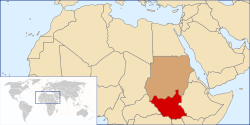
"We have less than six months until the referendum," Scott Gration said at the Center for Strategic and International Studies. "We have less than a year until we could, likely, have a new country in Africa — a new country as part of the United Nations."
Tuesday, July 13, 2010
Happy Birthday, Sunday in the South!

 |
| Please rate SITS |
Over the last five years, there were 359 more days than postings, and that is pretty good, because that means that about 8 of every 10 days there has been a contribution to this blog, many of unquestionably questionable value, but a few have hopefully have helped someone around the world, now 157 nations. The blog is running a respectable rank of #8,730,024 today in the world according to the three-month Alexa traffic rankings, and ranks 18 today among the top 100 Christian blog topsites.
 Join the little cadre of 54 subscribers to Sunday in the South
You can have every posting sent directly to your email inbox each morning by signing up below. No matter how many posts are sent on any particular day, you just get one email a digest form.
The longest-running subscriber is Donna Davis in Clinton, SC, who subscribed December 10, 2006. The latest subscriber signed up June 10, 2010, from Zambia.
The longest-running subscriber is Donna Davis in Clinton, SC, who subscribed December 10, 2006. The latest subscriber signed up June 10, 2010, from Zambia.
Box not working? Click here.
Top Posts on Sunday in the South so far this year 2010:
1- Matthew 22:34-40 - Keeping the main thing the main thing (posted March 2007)
2- Psalm 127-128 - The importance of family (posted August 2005)
3- Leviticus 6:8-13 - Keep the fire burning (posted March 2006)
4- Exodus 15:22-27 - Marah and Elim (posted August 2007)
5- Elvis Presley age progression (posted August 2007)

5- Elvis Presley age progression (posted August 2007)

Sunday, July 11, 2010
Isaiah 13-20: Hope in the midst of the storm
 |
| Union Missionary Baptist Church |
Request free DVD or CD of this message from genebrooks@yahoo.com. Include your mailing address.
| | | | |
Opening thought:
It is no secret that we are living in desperate times. We have millions out of work in this country. We have millions whose unemployment benefits have run out. And we have millions more who have given up trying to find anything to do.
We have a world that is rife with extremism and hatred. We have nations led by madmen in places like North Korea, Venezuela, Zimbabwe, Cuba, and Iran who are desperate to acquire means to destroy their enemies. We have terrorist organizations in the Middle East which have morphed into political parties and are taking over their nations.
We see movements around the nation of Israel that point directly to war in that part of the world soon. We are a nation fighting wars on two fronts already, in Iraq and Afghanistan, and now fighting the longest war in American history. Yet we are still just as vulnerable to biological, chemical, and radiological warfare on our own soil as we were on September 10, 2001.
We have a region of our nation which still bears the scars of the worst hurricane in our history, Katrina, and is now dealing with the worst environmental disaster in history with the BP oil spill. When a quart of oil can make toxic thousands of gallons of ocean water, no one can tell how much oil is bellowing out of that hole each day, and no one seems to know how to stop it.
We have a government that is pushing socialism on its people against their will, which has no regard for the sanctity of human life, even this week making a recess appointment of a man to head Medicare and Medicaid who is the leading advocate of death panels and withholding care from elderly patients in order to reduce health care costs. We have a government whose judicial and executive powers are pushing a new definition of marriage on its people against their will, a definition that is not only contrary to God’s loving Word, but will open the door to marital anarchy and destroy the foundation of human society that has existed since the Garden of Eden.
The business world cannot make financial plans for the coming year not knowing how much they will owe in taxes when the Bush tax cuts expire at the end of the year, bringing the largest tax increases in US history, and while they wait to hear what actual costs and requirements businesses will have to carry under health care reform.
We have an economy that is showing not just signs of another double dip recession, but the same signs that we saw before the Great Depression. Our national debt stands at $13 trillion, enough to make every individual in America owe $118,000 each. And our debt is rising each day to the tune of $3.87 billion. Where is this train going? Our economists warn that at present rates, that our government could be insolvent in 18 months. That’s two Christmases from now.
We have a nation that would like to destroy us, and seeing our weakness, they are happy to sell us their goods with “Made in China” and let our government borrow more money from them to pay banks bailouts on their credit programs to cover losses sustained by Americans consuming products "made in China." We have fanatics from a false religion that would like to destroy us, and so they use our open borders and our open society to come in among us, make money from us, settle into our neighborhoods, even right here in suburban North Carolina, and wait for orders to attack.
We are living in a storm of geopolitical, environmental, economic, military, and civilizational proportions. But our passage of Scripture today teaches us that there is hope in the storm.
Contextual Notes: Judah was in the midst of a storm. The entire Middle East was being mauled by the cruel nation of Assyria. First little Judah was being intimidated by her small neighbors, northern Israel and Aram (Syria), to ally with them against Assyria or they would invade and destroy Judah. Now the superpower Egypt is sending envoys to Judah to ask them to ally with them against Assyria. After all, Judah would take the brunt of any invasion, keeping Assyria busy while Egypt could mount an attack to protect herself.
Isaiah is the man of God, and he counseled the king of Judah stay away from dangerous alliances with any other nation and trust the Lord. King Ahaz didn’t do that, but instead went from the frying pan into the fire by running to Assyria to ally with them! To voluntarily give up sovereignty and pay heavy taxes to ally with Assyria, the most ruthless of nations! What a fool! The Assyrians had not one honest bone in them to hold to any alliance. Instead, Ahaz caused trouble for everybody in the region because he refused to trust God.
Chapter 13 begins a new section as we see in 13:1 where a new superscription begins the series of judgments on the nations which are punctuated with the hope of a Messiah. We see judgments prophecies against Judah’s neighbors and enemies in chapters 13-20: Babylon (13:1-14:23), Assyria (14:24-27), Philistia (14:28-32), Moab (15:1-16:14), Damascus (17:1-14), and Egypt (18:1-20:6).
Four great themes dominate the OT’s vision of the end times, and we see them in all in the section of Scripture we have before us today. (1) World conflict, war, and divine judgment (Isa. 13); (2) A literal regathering of Israel to their Land (Isa. 14:1-3); (3) the glorious world-wide kingdom of Messiah (Isa. 16:5); and (4) a remnant of Israel returning to the Lord (Isa. 17:6).
Pray and Read: Isaiah 13-20, noting main sections.
Key Truth: Isaiah wrote Isaiah 13-20 to teach Israel that there is hope in the midst of a gathering storm.
Key Application: Today I want to show you what God’s Word says about trusting Him in the midst of the storm.
Sermon Points:
We have a world that is rife with extremism and hatred. We have nations led by madmen in places like North Korea, Venezuela, Zimbabwe, Cuba, and Iran who are desperate to acquire means to destroy their enemies. We have terrorist organizations in the Middle East which have morphed into political parties and are taking over their nations.
We see movements around the nation of Israel that point directly to war in that part of the world soon. We are a nation fighting wars on two fronts already, in Iraq and Afghanistan, and now fighting the longest war in American history. Yet we are still just as vulnerable to biological, chemical, and radiological warfare on our own soil as we were on September 10, 2001.
We have a region of our nation which still bears the scars of the worst hurricane in our history, Katrina, and is now dealing with the worst environmental disaster in history with the BP oil spill. When a quart of oil can make toxic thousands of gallons of ocean water, no one can tell how much oil is bellowing out of that hole each day, and no one seems to know how to stop it.
We have a government that is pushing socialism on its people against their will, which has no regard for the sanctity of human life, even this week making a recess appointment of a man to head Medicare and Medicaid who is the leading advocate of death panels and withholding care from elderly patients in order to reduce health care costs. We have a government whose judicial and executive powers are pushing a new definition of marriage on its people against their will, a definition that is not only contrary to God’s loving Word, but will open the door to marital anarchy and destroy the foundation of human society that has existed since the Garden of Eden.
The business world cannot make financial plans for the coming year not knowing how much they will owe in taxes when the Bush tax cuts expire at the end of the year, bringing the largest tax increases in US history, and while they wait to hear what actual costs and requirements businesses will have to carry under health care reform.
We have an economy that is showing not just signs of another double dip recession, but the same signs that we saw before the Great Depression. Our national debt stands at $13 trillion, enough to make every individual in America owe $118,000 each. And our debt is rising each day to the tune of $3.87 billion. Where is this train going? Our economists warn that at present rates, that our government could be insolvent in 18 months. That’s two Christmases from now.
We have a nation that would like to destroy us, and seeing our weakness, they are happy to sell us their goods with “Made in China” and let our government borrow more money from them to pay banks bailouts on their credit programs to cover losses sustained by Americans consuming products "made in China." We have fanatics from a false religion that would like to destroy us, and so they use our open borders and our open society to come in among us, make money from us, settle into our neighborhoods, even right here in suburban North Carolina, and wait for orders to attack.
We are living in a storm of geopolitical, environmental, economic, military, and civilizational proportions. But our passage of Scripture today teaches us that there is hope in the storm.
Contextual Notes: Judah was in the midst of a storm. The entire Middle East was being mauled by the cruel nation of Assyria. First little Judah was being intimidated by her small neighbors, northern Israel and Aram (Syria), to ally with them against Assyria or they would invade and destroy Judah. Now the superpower Egypt is sending envoys to Judah to ask them to ally with them against Assyria. After all, Judah would take the brunt of any invasion, keeping Assyria busy while Egypt could mount an attack to protect herself.
Isaiah is the man of God, and he counseled the king of Judah stay away from dangerous alliances with any other nation and trust the Lord. King Ahaz didn’t do that, but instead went from the frying pan into the fire by running to Assyria to ally with them! To voluntarily give up sovereignty and pay heavy taxes to ally with Assyria, the most ruthless of nations! What a fool! The Assyrians had not one honest bone in them to hold to any alliance. Instead, Ahaz caused trouble for everybody in the region because he refused to trust God.
Chapter 13 begins a new section as we see in 13:1 where a new superscription begins the series of judgments on the nations which are punctuated with the hope of a Messiah. We see judgments prophecies against Judah’s neighbors and enemies in chapters 13-20: Babylon (13:1-14:23), Assyria (14:24-27), Philistia (14:28-32), Moab (15:1-16:14), Damascus (17:1-14), and Egypt (18:1-20:6).
Four great themes dominate the OT’s vision of the end times, and we see them in all in the section of Scripture we have before us today. (1) World conflict, war, and divine judgment (Isa. 13); (2) A literal regathering of Israel to their Land (Isa. 14:1-3); (3) the glorious world-wide kingdom of Messiah (Isa. 16:5); and (4) a remnant of Israel returning to the Lord (Isa. 17:6).
Pray and Read: Isaiah 13-20, noting main sections.
Key Truth: Isaiah wrote Isaiah 13-20 to teach Israel that there is hope in the midst of a gathering storm.
Key Application: Today I want to show you what God’s Word says about trusting Him in the midst of the storm.
Sermon Points:
- In the midst of war and terrorism, our hope is in Christ, our Compassion and our relief (Isaiah 13:1-14:3).
- Scriptures related to Israel’s literal Regathering to the Land: Isaiah 11:11-12; 14:1-3; 27:12-13; 43:1-7; 66:20-22; Jeremiah 16:14-16; 23:3-8; 30:10-11; 31:8, 31-37; Ezekiel 11:17-21; 20:33-38; 34:11-16; 39:25-29; Hosea 1:10-11; Joel 3:17-21; Amos 9:11-15; Micah 4:4-7; Zeph. 3:14-20; Zech 8:4-8
- In the midst of death and demonic attack, our hope is in Christ our Sovereign and our refuge (Isaiah 14:4-32).
- Some say that 14:12-15 is not a window on the person of Satan and his five “I will”s, but Jesus himself applied verse 12 to Satan in Luke 10:18, and the Apostle John does the same in John 12:31; 16:11; and Revelation 12:7-9, 11.
- In the midst of economic and environmental disaster, our hope is in Christ our King who calls a remnant (Isaiah 15:1-17:14).
- In the midst of civil strife abroad and at home, national defeat, economic and environmental disaster, and confusion in our government, our hope is in Christ our Healer and our peace (Isaiah 18:1-20:6).
Saturday, July 10, 2010

Wednesday, July 07, 2010
UMBC's SBC messengers
Here's a picture of our messengers from Union Missionary Baptist Church in Rocky Mount, NC, to the 2010 Southern Baptist Convention in Orlando, Florida.
 Left to right: Jacob Edmisten (with his man purse), Kelsey Edmisten, JoAnn Allen, Waymouth Allen, Gene Brooks, Billy Vick, Dorothy Vick, Luke Brooks, Ava-Grace Brooks, Nancy Stallings, Rachel Brooks, Amanda Brooks holding Lily Brooks, and Marvin Stallings.

Subscribe to:
Posts (Atom)