Thursday, September 29, 2011

Consumed by Him by consuming Him

Christ faithfully keeps the covenant of his presence with all who will sit still before Him with His Word and let His Spirit direct them to His Heart. Just as the priests each day offered sweet-smelling sacrifices to Him, so the sweet savor of our lives (2 Cor. 2:14-15) as a living sacrifice (Rom 12:1), holy and pleasing to Him (Rom. 12:2) displays His Presence in our lives for believers and unbelievers to see. Never be content with the level of intimacy you have found in Him, but crave with Holy hunger that living Bread (John 6:35, 48-51). When we hunger to consume Him, we are consumed by Him.

Where is the appetite for Christ among those who name Him as Lord? 

Monday, September 26, 2011

Iranian court: Youcef is apostate, ordered to recant faith in Christ

Youcef Determined To Be An Apostate And Commanded To Recant
Pastor Youcef Nadarkhani
IRAN - The 11th branch of Gilan Provincial Court determined on Sunday (Sept. 25) that Youcef Nadarkhani has Islamic ancestry and therefore must recant his faith in Jesus Christ. The Islamic judges demanded that he recant his faith in Christ. They have stated that even though their judgment is against current Iranian laws, they must uphold the previous decision of the 27th Branch of the Supreme Court in Qom.


When the judges asked him to “repent,” Youcef stated, “Repent means to return. What should I return to? To the blasphemy that I had before my faith in Christ?” The judges replied, “To the religion of your ancestors, Islam.” To which he replied, “I can not.”

Dressing up the Gospel . . .


Sunday, September 25, 2011

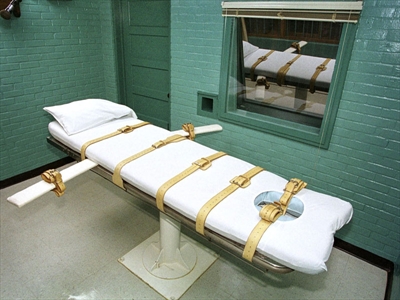
Numbers 35:30-34 - Is Capital Punishment Biblical?

Opening thought:
This past Wednesday night, Georgia inmate Troy Davis was executed for the 1989 murder of Mark MacPhail, an off-duty Savannah police officer. The execution was about four hours later than initially scheduled, because prison officials waited for a U.S. Supreme Court ruling on Davis' request for a stay. After 10 p.m. ET, the Supreme Court, in a brief order, rejected Davis' request. His supporters had sought to prevent the execution, saying seven of the nine witnesses against him have recanted or contradicted their testimony. Davis died at 11:08 p.m. ET, according to a prison official.[1]
While cameras were focused on Georgia, the state of Texas quietly executed Lawrence Russell Brewer, a white supremacist who killed a black man in 1998 by dragging him behind his pickup truck. Brewer was the first of two to be put to death for the crime, while a third man received a life sentence. He spoke no last words, and tears formed in his eyes as he died, according to the Houston Chronicle. Brewer’s execution came after the Supreme Court issued stays to halt Texas’s two previous scheduled executions.[2]
man convicted of the 1994 execution-style shooting of a store clerk in Alabama was put to death on Thursday by lethal injection in the third U.S. execution carried out this week. Derrick O'Neal Mason killed 25-year-old Angela Cagle during the attempted robbery of a convenience store in Huntsville, Alabama. Authorities said he forced Cagle to strip naked and shot her twice in the face at close range. Mason, 37, was pronounced dead at 6:49 p.m. local time. Mason had spent 16 years on death row. He was the fifth inmate executed in Alabama this year, and the 36th in the United States in 2011.
"We'll miss Angie until we see her in heaven," her family said in a written statement. "We are grateful for the prayers and support we have received in these 17-1/2 years in dealing with having her ripped from our lives but never from our hearts."[3]
Usually I have my preaching calendar planned several weeks ahead. For example, I know with some certainty what I will be preaching through the end of January. It is sometimes strange how I can plan well ahead that preaching calendar, and the topic that I had planned weeks ago is current in the culture when it comes time to preach it. That happened this week on the question, “Is Capital Punishment Biblical?” from Numbers 35. Let’s turn to that chapter in the Old Testament and let me give you some background on the passage.
Contextual Notes:
As Moses continues laying down principles for the occupation of the Promised Land, he has spoken about driving out the Canaanites (Num 33:50-56), defined the boundaries of Canaan (Num 34:1-15), and selected men to supervise the land distribution (Num 34:16-29). Now in chapter 35, Moses sets aside 48 towns for the Levites within the other tribes’ territories, and they were to be scattered among all the tribes so that they would know the Torah of the Lord (Num 35:1-8). He establishes six cities of refuge, all within a day’s walk for every Israelite to find sanctuary (Num 35:9-15), and he sets principles for dealing with homicide, defining murder (Num 35:16-21) and accidental killing (Num 35:22-29), so that the Promised Land will not be defiled with blood (Num 35:30-34). This chapter thus becomes a key to understanding the Scripture’s outlook on murder and capital punishment.

Key Truth: Moses wrote Numbers 35:30-34 to teach Israel the importance of human life and capital punishment.
Key Application: Today I want to show you what God’s Word says about being capital punishment.
Key Verse: Num 35:33
Pray and Read:  Numbers 35:30-34

Sermon Points:
1.   Capital punishment requires multiple testimony (Num 35:30)
2.   Capital punishment forbids special privileges (Num 35:31-32)
3.   Capital punishment cleanses the land of defilement (Num 35:33-34)

Friday, September 23, 2011

Shouwang, Youcef, Lahore Christians

Chinese police block Shouwang Church's meeting
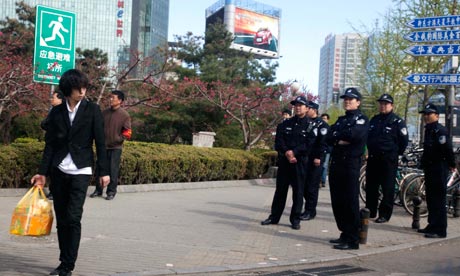
BEIJING, CHINA Now 23 weeks and counting, thirteen Chinese believers including a pastor were arrested at Beijing’s Shouwang Church’s outdoor Sunday services on September 11. The government forced them out of their facility around Easter, but the church has continued to meet in an outdoor park in the face of mass arrests each week.

Public Security Bureau (PSB) officers, attempting to deter the church from assembling, detained many believers at home on Saturday, and officers from Guangying Police Station detained one woman in a hotel. Officers separated detainees among eight local police stations, interrogated, and released by Tuesday the 13th.

One of the women detained was celebrating her birthday. After being released around noon, she was re-arrested and detained in a police station basement. Many believers risking arrest, accompanied her to the station and waited outside with cake and birthday cards. “When she was released around 11:00 that night, they celebrated together and enjoyed the love of being in the fellowship of Christ. May God remember what she and other believers sacrificed."

One man who was detained 48hrs until Tuesday Sept. 13 was allowed a family visit on Sunday evening. “Our brother met his wife and child in the lobby of the police station under the watch of guards. Our sister witnessed that he was full of peace and joy when he hugged his child.” Outside the eight police stations where believers were detained, many other believers, risking arrest, “waited outside to be companions with those who were under detention. During this period of spiritual warfare, our love of being one family in Christ makes this Mid-Autumn day very special."

Pray for the Shouwang Church to continue to be faithful and continue in unity during this trial of their freedom and faith. Ask the Lord to open a door for them to occupy the floor in the building which they have leased and already paid in full. Pray that their pastors would be released from house arrest and their members would no longer be arrested for gathering to worship. Pray that their love for one another would be an example to us and churches around the world.  Source: AssistNews

Thursday, September 22, 2011

Peace in His Presence

"Take courage! Don't be afraid!"
Everybody is looking for peace. One time Jesus spoke to the storm and stilled it (Matt 8:23-27), but another time Jesus spoke in the midst of a storm (Matt 14:22-33) to calm his friends’ fears, “I’m here. Take courage. Don’t be afraid” (Matt. 14:27). Then he commanded his friend and disciple Peter to walk to Him in the middle of the storm (Matt 14:28-29). It was a test of his faith (Matt 14:30-31).  

The point? Jesus removes some storms, but when you are able to handle it, he will not remove some storms, even the storms of his friends. He chooses instead to be present with us in the midst. He walks right into them, in fact to demonstrate his greater glory. Even in the storm of Matthew 14, when the test was over, the wind ceased (Matt 14:32) and the result was worship (Matt 14:33).

Wednesday, September 21, 2011

Isaiah sermons: All in one place

Isaiah's Lips Anointed with FireImage via WikipedHere are links to all my sermon notes from the Isaiah series: 

Isaiah 1 - The Remedy for Rebellion

Isaiah 2-4 -- Our Pride and His Glory

Isaiah 5 - The Song of the Vineyard

Isaiah 6 - High and Lifted Up

Isaiah 7 - Immanuel: God with us

Isaiah 7:14 - The Virgin Shall Conceive

Isaiah 8-9: Trust and obey for there's no other way

Isaiah 9:1-5 - A Great Light

Isaiah 9:6-7 - Unto us a Child is born

Isaiah 10:5-12:6 -- The Root of Jesse

Isaiah 13-20: Hope in the midst of the storm

Isaiah 21-22 - The Valley of Vision

Isaiah 23 - God's sovereignty over global markets

Isaiah 23 - The Global Financial Crisis

Isaiah 24-25: Judgment saves!

Isaiah 26-27 - Darkness before Dawn

Isaiah 28-29: The Precious Cornerstone

Isaiah 30-31: The Holy One of Israel

Isaiah 32-33 - The King of Righteousness

Isaiah 34-35 - The Highway of Holiness

Isaiah 36-37 - The Prayer of Hezekiah

Isaiah 38 - Hezekiah's Illness

Isaiah 39 - Envoys from Babylon

Isaiah 40 - Comfort My People

Isaiah 41-42 - Here is My Servant!

Isaiah 43-47 - The Only One

Isaiah 48-49 - The Time of My Favor

Isaiah 50:1-52:12 - He Who Comforts

Isaiah 52:13-53:12 - Numbered with the Transgressors

Isaiah 54-55 - Come to the Waters

Isaiah 55:7 -Stop your Backsliding

Isaiah 56-57 - A House of Prayer for All Nations

Isaiah 58 - True Fasting

Isaiah 59 - The Redeemer will come to Zion

Isaiah 60 - Awaken to the Glory!

Isaiah 61 - The Year of the Lord's Favor

Isaiah 62 - Watchmen on the Walls

Isaiah 63 - Who is this, Robed in Splendor?

Isaiah 64 - The Potter and the Clay

Isaiah 65 - New Heavens and New Earth

Isaiah 66:1-16 - Peace Like a River

Sunday, September 18, 2011

Isaiah 23 - The Global Financial Crisis

The Triumphal Arch in Tyre, LebanonImage via Wikipedia
Triumphal Arch at Tyre, Lebanon, today
Opening thought
Last Friday morning the new unemployment numbers came out for August, and across our nation unemployment remained at 9.1%. Unemployment rose in 26 states and remained the same in 12 others. With very little economic growth the first half of the year, employers could not hire. And while North Carolina was the second highest state in the Union in adding jobs, our unemployment still grew from 10.1% to 10.4%. Our Nash, Wilson, and Edgecombe Counties still have some of the highest unemployment in the state, and we all had increases in August: Nash at 12.6% (up from 12% in July), Wilson at 13.6% (up from 12.4% in July), and Edgecombe at 16.2% (up from 14.5% in July).[1]

Times are tough and they have been now for three years. Does the Bible have anything to say about economic forces? Yes, in fact, Isaiah does.

Pray and Read:  Isaiah 23 in portions

Contextual Notes: In the chapters before us today, Isaiah continues his predictions of judgment that will soon strike the nations of his day in the Middle East. He had begun at chapter 13, and chapters 21-23 are a middle section that will end with an end-times prediction of judgment on the whole world in chapters 24-27.

The oracle of judgment in chapter 23 is about Tyre, the wealthy Phoenician seaport on the Mediterranean coast north of Israel. Just as Babylon is the land power (21), so Tyre is the sea power (23). Isaiah predicts the harbor will be destroyed and its greatness end. We see here the principle that every culture on earth will surely bear the judgment of God one day.

Key Truth: Isaiah wrote Isaiah 23 to teach Israel that the Lord uses economic forces for his sovereign purposes.
Key Application: Today I want to show you what God’s Word says about how the Lord uses the global economy for his purposes.

Sermon Points:
1.   The Lord uses global economic forces to bring forth His glory (Isa. 23: 1-9).
2.   The Lord uses global economic forces to bring forth His purposes (Isa. 23:10-14).
3.   The Lord uses global economic forces to bring forth His redemption (Isa. 23:15-18).

Friday, September 16, 2011

Palestinian state vs. historical truth

RAMALLAH, WEST BANK - SEPTEMBER 16: In this ha...Image by Getty Images via @daylife
Abbas news conference 9/16/2011
Let’s review the historical truth.

There has never been a state called Palestine. Palestine is a designation given by the Roman Empire to the region after General Titus' destruction of Jerusalem in A.D. 70. It was a name the Romans created to offend the Jews by calling it by the name of Israel's ancient enemies, the Philistines. 

There is no such ethnicity as a Palestinian. Palestinians are Arabs, the same as those found in the Kingdom of Jordan and twenty-two other Arab states.

British Mandate of Palestine, 1920s. Created b...Image via WikipediaThere has never been any nation at any time in history with Jerusalem as its capital, except Israel. Jerusalem has been Israel’s capital for over 3,000 years, even when they were stateless. Jerusalem is mentioned over 700 times in the Bible, but not one time in the Q'uran.

The land of Israel has been divided several times already.

The British Mandate and the San Remo Conference were the original “two state solution” creating Trans Jordan (now the Kingdom of Jordan) with 78% of the Mandated Jewish Homeland, as the homeland for the Arabs. 

Now the United Nations, heady with its own mythical power, totally and willingly ignorant of history, and emboldened in the drunkenness of their phantom sovereignty, is about to do it again, on September 23 through an application by the Palestinian Authority to the UN for a unilateral declaration of statehood.

Here's why it is unwise: 
"At the time of those events,” says YHWH,“when I restore the prosperity of Judah and Jerusalem, I will gather the armies of the world into the valley of Jehoshaphat.There I will judge them for harming my people, my special possession, for scattering my people among the nations, and for dividing up my land. Joel 3:1-2 NLT

Source: Les Lawrence 

Here is another resource. Share this chart with anyone who may be interested.  Click on the link to read the pdf - Israel and Palestinian Talking Points Chart.

Thursday, September 15, 2011

How unforgiveness hamstrings prayer

2 Corinthians 2:10-11

Want to know a secret? Forgiveness has a big part in spiritual warfare prayer. Unforgiveness and prayer are like oil and water. They don’t mix well. There’s a reason for that. Holding on to an offense (2 Cor. 2:10) rips the power out of our prayer. Forgiveness or the lack thereof, is an issue not just between us and our offending party, but between us and Jesus, too. Unforgiveness blinds us to the enemy’s strategies (schemes NIV/devices NKJV) against us (2 Cor. 2:11; same word in Eph 6:10-11).

How the strategy of unforgiveness works

Forgiveness is a vital element of spiritual victory. Unforgiveness horribly hamstrings our intercession. Here’s why. Unforgiveness puts us on the wrong side of God’s hearing and answering our prayers. At least twice Jesus taught about the relationship of unforgiveness to prayer (Mark 11:25; Matt. 6:12-15). Jesus even draws a direct correlation between forgiveness and the acceptability of our worship (Matt. 5:23-24). He instructs us to stop, drop, and go. Stop (your worship). Drop (your gift), and go (be reconciled, then come and worship.)

There is more, and it is sobering. James, that straight-talking half brother of Jesus, wrote, “Judgment without mercy will be shown to anyone who has not been merciful” (James 2:13). Unforgiveness places us with those who have fallen under the spirit of the last days, with a form of godliness but denying its power, manipulative, loaded down with sin, swayed by sinful desires, always learning but never able to acknowledge the truth (2 Tim. 3:16), liars (1 John 4:20-21). Worse, Jesus said that the Father turns over the unforgiving to tormentors, unless we forgive from our hearts (Matt. 18:23-35).

Jesus set the standard on forgiveness

Just before his suffering on the Cross, Jesus said, “The ruler of this world is coming, and he has nothing in Me” (John 14:30). What was he talking about? Nobody was more wronged that our Savior who prayed, “Father, forgive them” (Luke 23:34) “Consider him who endured such opposition from sinful men, so that you will not grow weary and lose heart” (Heb. 12:3-4). 

How many times should we forgive? Jesus said seventy times seven times (Matt. 18:21-22; Luke 17:1-4). Paul reminds us to “be kind and compassionate to one another, forgiving each other, just as in Christ God forgave you (Eph. 4:31-5:2). “Bear with each other and forgive whatever grievances you may have against one another. Forgive as the Lord forgave you (Col. 3:12-13).

Are you being defeated by your own unforgiveness? 

Unforgiveness serves victory to the devil on a silver platter. Repentance and forgiveness makes you right with the Lord. Forgiveness has no substitute as a weapon of victory. Mark it urgent: Forgive everyone and every offense (Eph. 4:20-24, 30-33).

PRAYER: Cry out to God, “Come, convict me of unforgiveness. Forgive me for my unforgiveness and for holding accounts against others. Cleanse me of the defilements of bitterness and resentment (Heb. 12:15; Gal. 5:16-21; Lev 19:17-18). Give me the victory of freedom in Jesus, who forgave me.”

Adapted from Sylvia Gunter, Prayer Essentials for Living in His Presence (Birmingham, AL: Father’s Business, 2000), vol. 1, 201-296.

Tuesday, September 13, 2011

Somali Christian beheaded; Five believers released in China


SOMALIA (EAST AFRICA) - A kidnapped Christian convert from Islam was found decapitated Sept. 2. Juma Nuradin Kamil was forced into a car on Aug. 21 by three suspected Islamic extremists from al Shabaab, a terrorist group with ties to al Qaeda who have vowed to rid Somalia of Christianity. “It is usual for the al Shabaab to decapitate those they suspect to have embraced the Christian faith, or sympathizers of western ideals,” a Somali Christian leader said. “Our brother accepted the Christian faith three years ago and was determined in his faith in God. We greatly miss him.”

The five Linfen church leaders released (China Aid)
CHINA - After serving two years of physical and psychological torment, five house-church leaders were released last week from re-education through labor camps in China. Fao Fuqin, Zhao Guoai, Yang Caizhen, Yang Hongzhen and Li Shuangpin are all leaders in the 50,000-member Linfen City house churches. They were arrested Sept. 13, 2009, in the aftermath of an attack on Linfen when over 400 local police, government officials, and hired men attacked and demolished a church building, clashing with several hundred church members, sending 30 to the hospital. Church members are still scattered, but they continue to meet and worship in private homes. Despite their suffering the five leaders released last week say they now feel strong. "We who have been released express our most sincere gratitude to the brothers and sisters around the world who have been concerned about us and who have helped us," they said. Five more Linfen church leaders continue to serve prison terms of up to seven years.

Related:

PrisonerAlert Update: Pastor Wang Xiaoguang


Linfen-Fushan House Church Christian Sentenced to 7-Years in Prison

Thursday, September 08, 2011

Nothing but the Blood of Jesus

Revelation 12:11

From the book of Deuteronomy we hear the truth, “The life is in the blood” (Deut. 12:23). Across the centuries of the church, we have held precious the songs about the Blood of Jesus. The Blood of Jesus stands as evidence of how much we are loved. When we truly come to grips with our unworthiness to take the sinless Sacrifice of our Lord as our atonement, we are overcome as we sing with the hymn writer, “O precious is the flow that makes me white as snow.”

What His Blood Does

  • By His Blood Jesus atoned for my sin (Lev 17:11; Rom 3:25; 1 John 4:10)
  • By His Blood, I am justified, acquitted of sin and guilt, and exonerated of God’s wrath and judgment (Rom 5:9)
  • By His Blood I am forgiven once for all. My guilt is legally remitted (Heb 9:22, 25)
  • By His Blood even our sins committed in ignorance are availed (Heb 9:7)
  • By His Blood I am redeemed from the empty way of life handed down to me from my forefathers (1 Peter 1:18-19)
  • By His Blood sprinkled in the Most Holy Place, atonement is made for us (Lev 16:27)
  • By His Blood our redemption and forgiveness were purchased from sin and death by God’s grace, and I forever belong to Him (Eph 1:7; 2:13; Matt 26:28; Col 1:14; Rev 5:9; Acts 20:28)
  • By His Blood we have a testimony that the death angel has passed over us (Exod. 12:13, 23)
  • By His Blood we have abundant grace and peace  through its cleansing and sanctifying work (1 Peter 1:2; Heb 13:12)
  • By His Blood I now have full salvation and reconciliation with joy in Him (Rom 5:10-11)
  • By His Blood we are reconciled to God as all His righteous requirements of us are satisfied (Col 1:20)
  • By His Blood I have right standing before God as a priest in His Kingdom (1 John 1:7; Rev 1:5-6; 7:14)
  • By His Blood we have an unassailable position in our salvation (1 Cor.10:16; John 10:28-29)
  • By His Blood I stand clean before God and thankful for his irrevocable covenant (Heb 9:14-15, 24; Luke 22:20; 1 Cor. 11:25)
  • By His Blood the eternal covenant of Jesus binds to me all the transforming power and pleasure of God (Heb 13:20-21)
  • By His Blood we have confidence to enter in and draw near to God in full assurance that there is no ground of accusation (Heb. 10:19-22; Eph 2:13)
  • By His Blood we have overcoming power over the enemy, and it prevails over the gates of hell (Rev 12:11; Matt 16:18)
  • By His Blood we have power over the sins, habits, and hurts of this life (Zech 9:11-12)
  • By His Blood Jesus destroyed the works of the devil, and it stands effective between me and the enemy (Heb 2:14)
  • By His Blood we celebrate our Redeemer (Matt. 26:28)

Overcome with accusations? Stand on Heb. 9:14; Rev. 12:10-11. Overwhelmed at the warfare? Pray Rev 12:11; 19:11-16. Overtaken by sin and temptation? Run to Psalm 40:12-13; 1 John 1:9. Find your power and your safety in the Blood of the Lamb! It is the confession of overcomers (Rev. 12:11).

Wesley Duewel, the writer on prayer, says the Blood is “the greatest, most powerful, most unanswerable plea of all. There is no more prevailing argument we can bring before God than the sufferings, blood, and death of His Son. We have no merit of our own. We do not prevail in prayer by techniques or past experience. It is only through the blood of Jesus."

Pray till you have assurance of God’s will. Pray till you have been given by the Spirit a vision of what God longs to do, needs to do, wants to do. Pray till you are gripped by the authority of the name of Jesus. Then [call on the covenantal power of] the blood of Jesus. Call on them [the Name and the Blood], stake your all on them, and use them to the glory of God and the routing of Satan.” [1]

Read the truth above. Pray the truths above. Declare the freedom of the truth above.
“There is power, power, wonder-working power in the precious blood of the Lamb.”


Adapted from Sylvia Gunter, Prayer Essentials for Living in His Presence vol. 1 (Birmingham, AL: The Father's Business, 2000).

[1]Wesley Duewel, Mighty Prevailing Prayer (Grand Rapids: Francis Asbury Press, 1990), 307.

Sunday, September 04, 2011

1 Timothy 6:6-10 - The Problem with Gambling

Opening thought
“On Christmas morning in 2002, Jack Whittaker of Mount Hope, West Virginia, woke up to perhaps the biggest gift imaginable. Whittaker had won the Powerball lottery jackpot -- a whopping $315 million. It was a made-for-TV Christmas story, and Whittaker's hardworking family became celebrities overnight. Whittaker, his wife, Jewel, and granddaughter Brandi Bragg would become TV personalities. But as Whittaker celebrated, he had no way of knowing the coming tragedy and the loss of everything he held dear.
Whittaker now says that he regrets winning the lottery. "Since I won the lottery, I think there is no control for greed," he said. "I think if you have something, there's always someone else that wants it. I wish I'd torn that ticket up."
Whittaker gave away at least $50 million worth of houses, cars and cash. Suddenly, the man who won a fortune at Christmas had become everybody's Santa Claus.
Whittaker’s construction company he started had been doing $16-17 million in building, but less than a year after winning the lottery, the company’s success eroded under $3 million dollars in legal fees fending off over 400 lawsuits, because "everybody wants something for nothing."
Whittaker began drinking heavily at the local bars to console himself, and getting in fights over money. The luckiest man in West Virginia was friendless and lonely. It seemed as if everyone wanted a piece of his winnings except the one person Whittaker wanted to give it to – his granddaughter Brandi.
Whittaker bought and decorated an elaborate home for Brandi and her mother, gave her about $2,000 a week, and bought her four new cars. But the cars and cash began to attract the attention of some "bad people," including drug dealers.
Brandi started to use illegal drugs. Whittaker repeatedly tried to get her help and sent her to several treatment programs, but she couldn't stay clean. "She doesn't want to inherit the money; she just looks for her next drugs," Whittaker said. "She said, 'Pawpaw, all I care about is drugs.' It broke my heart."
Almost two years after Whittaker hit the jackpot, Brandi disappeared. After a frantic two-week search, on Dec. 20, 2004, she was found dead, wrapped in a plastic sheet, dumped behind a junked van. The cause of death was listed as unknown. Whittaker believes that the Powerball win had become a curse upon his family. "My granddaughter is dead because of the money," he said.[1]
In 2009, Brandi’s mother Ginger was found dead, too, in Daniels, WV, and Whittaker is being sued by Caesars Atlantic City casino for bouncing $1.5 million worth of checks to cover gambling losses.[2] But you know,” said the West Virginia Powerball winner, I just don't like Jack Whittaker. I don't like the hard heart I've got. I don't like what I've become."
But you know,” said the West Virginia Powerball winner, I just don't like Jack Whittaker. I don't like the hard heart I've got. I don't like what I've become."[1]
Because of a lack of Biblical preaching in the churches on the subject, there are three schools of thought on gambling and the Christian faith. The first position sees gambling on a small scale as a harmless social activity. This is the position of the Catholic Church. The second position sees no great harm in gambling but opposes legalization on a major scale. Many mainline denominations take this position along with many individual Catholics. The third position views gambling as a moral evil and therefore opposes it any form, public or private. Most evangelicals take the third view.
Despite that, gambling is fairly popular among church members of all stripes. When asked, 8 out of 10 Roman Catholics classify themselves as gamblers. 77 percent of Jews gamble, 74% of Presbyterians and Episcopalians, 63% of Methodists, 43% of Baptists, and 33% of nondenominational conservative Bible churches. While that figure sounds low when compared to the denominations, it means that 2 of 5 Baptists and 1 of 3 more conservative Christians seem to have no problem with gambling.”[2] So count down your row five people. Statistically speaking, two of them gamble.
Some people say, “Show me the verse in the Bible that says, “Thou shalt not gamble.” Well, there’s not one, but you can’t find “Thou shalt not take cocaine,” either. The Bible doesn’t say you shouldn’t drive 80 miles an hour in a school zone, either. The Bible does have a number of principles that teach us to stay away from gambling, and one of the most powerful is the warning Paul gives to Timothy about greed in 1 Timothy 6.
Contextual Notes:
In 1 Timothy 6, Paul continues finishes his advice to Timothy about relationships (1 Tim 6:1-2) and then launches into a blunt assessment of those who view religion as a way to get rich (1 Tim. 6:3-5), warning everyone against that desire to get rich. It is much better, Paul says, to learn the wisdom of contentment, because every kind of evil tens to spring up where money-love exists (1 Tim 6:6-10). Paul reminds Timothy to flee all this (1 Tim. 6:11-16), then reminds those who are already rich that money is a tool, a resource to enable those who are well off to do good with it. Wealth is a blessing when one is generous (1 Tim 6:17-19). Timothy is to focus on his mission and avoid the foolishness which has caused some to wander from the faith (1 Tim. 6:20-21).
Key Truth: Paul wrote 1 Timothy 6:6-10 to warn believers about the benefits of contentment and the dangers of greed.
Key Application: Today I want to show you what God’s Word says about gambling.
Key Verse: 1 Timothy 6:9
Pray and Read:  1 Timothy 6:6-10
Sermon Points:
1.   Godliness is contentment and great gain (1 Tim. 6:6-8)
2.   Greed found in gambling is a temptation and trap (1 Tim. 6:9-10)
Exposition:   Note well,
1.   GODLINESS IS CONTENTMENT AND GREAT GAIN (1 Tim. 6:6-8)
a.   Notice how Paul picks up on the last line of verse 5 and contrasts financial gain with the gain of contentment.
b.   Contentment (autarkeia) is a satisfaction with the situation God has ordained for you. This word occurs only one other time in the NT: 2 Cor. 9:8 where NIV says “having all that you need.”  The verb root is used by John the Baptizer to urge his listeners to be content with their wages (Luke 3:14), by Jesus who warned, “Guard against every form of greed” (Luke 12:15) and Hebrews which contrasts greed with contentment (Heb. 13:5-6)
c.   Then the reasons for contentment follow like a proverb (1 Tim 6:7) reminiscent of Job 1:21; Prov. 30:8; Eccles. 5:15; Luke 12:16-21. First, it is futile to concentrate so much energy on something that is of only such a temporal nature. Second, contentment really only requires the minimum of things – food and clothing (and we add shelter, 1 Tim 6:8). The Lord made the same assurances (Matt. 6:25-33). Third, greed and covetousness (wanting something somebody else has) has tragic results. We see in verses 9-10
d.   APPLICATION: Chuck Swindoll gives some of the benefits of contentment. First, contentment allows enjoyment now rather than constant striving. Because it flows from the heart, it allows us to enjoy those around us here and now and doesn’t rely on wishful thinking or circumstances.
e.   Second, contentment gives us the freedom to recognize and applaud others’ achievements without being eaten alive by envy. Contentment relieves us of unhealthy competition and comparison. When we are content, we can celebrate someone else’s successes without falling into jealousy.
f.    Third, contentment allows us to develop a genuinely grateful spirit. The uncontented do not know what thankfulness is all about. They lose sight of their many blessings because they are too focused on what they do not have. And thankless people make poor Christians. Ungrateful believers are embarrassing in their witness (1 Thess. 5:18; Heb. 13:15).[3]
2.   GREED FOUND IN GAMBLING IS A TEMPTATION AND A TRAP (1 Tim. 6:9-10)
a.   1 Tim 6:9 - Whenever we desire anything other than or more than a desire to follow God’s will, we create an awful conflict. Only by abandoning our desire for riches can we be free of the danger of making wrong or sinful choices in the hope of obtaining it. The lust for wealth is what is dangerous, not the wealth itself. Nothing at all should distract us from our commitment to God’s will.
b.   Gambling is wagering money on the uncertain outcome of a game, contest, or other event, whose outcome is dependent either wholly on chance or partly on chance and partly on skill, with a prize offered to a winner at someone else’s loss.” Therefore, there are three key elements in the definition of gambling: First, the betting of money or something else of value. Second, the winner is determined by a chance or uncertain event. Third, the gain of the winners is at the expense of the losers.
c.   Have you been in the gas station to pay for you fill-up and seen a line of people purchasing Lotto tickets? Have you looked at the people in the line? Do they look rich to you? Do they look smart to you? How many people have you heard just built a house with money they won at the sweepstakes in town? How many people do you know are going to vacation in Hawaii off their winnings on video poker? Why do you think those places stay open? Do you think they would if they were LOSING money? No. Rich people and smart people would be in the lottery line if the lottery was a real wealth-building tool, but the truth is that the lottery is a rip-off created by our government.
d.   "But Pastor, our state says the money is going to scholarships!" Yeah, as much as 33 cents on the dollar, they say, but guess who's getting the scholarships statistically? Kids in middle-class and upper-class ZIP codes—so poor people are sending middle class kids to school. How stupid is that?
e.   “But Pastor, someone has to win!" Do you know who’s winning? The divorce lawyers and bankruptcy lawyers are the ones winning. Did you know the divorce rate among Lottery winners is four times the national average? Did you know that 65% of Lottery winners are bankrupt within 15 years? Now who is winning and who is losing? I sure don't like that, and I bet you don't either.
f.    What gambling really is – it’s a tax on the poor and people who can't do math. Don't get mad. This is not even a moral statement. It is a mathematical, statistical fact. Studies show that the ZIP codes that spend four times what anyone else does on lottery tickets are those in lower-income parts of town. One recent report found that families who make under $12,400 spend about $645 a year on lottery tickets.[4]
g.   John MacArthur says “the success of gambling is based on certain sins.  If those sins didn't exist, gambling wouldn't either.  The sins that support gambling are materialism, greed, discontent, exploitation, laziness, distrust of God's provision, disdain for the virtues of labor, irresponsible stewardship and indifference to those in need… nothing frankly is more indicative of the corruption of our government than legalizing gambling.  And nothing is more characteristic of organized crime than illegal gambling.  Both provide legitimacy and availability to a sin that is very destructive of moral character and even of the fabric of a nation.  Our declining moral character, our dissolution as a nation is manifest through this epidemic of gambling.”[5] MacArthur gives five reasons that gambling is wrong:
h.   Because it denies the reality of God’s sovereignty (by affirming the existence of luck or chance) (Isaiah 65:11-12; cf. Baal-gad “Lord luck” Josh. 11:17; 12:7; 13:5; Num 13:10; God is sovereign. Psalm 103:19; 74:4). Isaiah 65:11-1211 “But you are those who forsake the LORD, Who forget My holy mountain, Who prepare a table for Gad, (Fortune, a pagan deity) And who furnish a drink offering for Meni (Number or Destiny, a pagan deity). 12 Therefore I will number you for the sword, And you shall all bow down to the slaughter; Because, when I called, you did not answer; When I spoke, you did not hear, But did evil before My eyes, And chose that in which I do not delight.”
i.    Because it is built on irresponsible stewardship (tempting people to throw away their money) (Psalm 24:1; 50:10-12; Deut. 8:18; Parable of the stewards, Matt. 25:14-30; 1 Cor. 4:2).
j.    Because it erodes a biblical work ethic (by demeaning and displacing hard work as the proper means for one’s livelihood) (Gen. 3:19; Prov 12:11; 13:22; Eph. 4:28; 2 Thess. 3:10; 1 Tim 5:8)
k.   Because it is driven by the sin of covetousness (tempting people to give in to their greed) (Exod. 20:17; Deut. 5:21; Luke 12:15; Prov. 30:7).
l.    Because it is built on the exploitation of others (often taking advantage of poor people who think they can gain instant wealth) It violates the 8th Commandment not to steal. It is fundamentally a violation of our Lord’s command to love your neighbor.  It takes money from others.  It strips families of resources.  It increases debt.  It leads to poverty.  It leads to suicide.  Twenty percent of addictive gamblers have attempted suicide, and the suicide rate of the spouses of compulsive gamblers is 150 times the national average.  Forty percent of white collar crime in America is caused by compulsive gamblers.  Gambling is pursuing prosperity at another's expense, exploiting the poor and the undisciplined.  It teaches greed and covetousness. It attacks the ethics of hard work, saving, self-denial, capital accumulation. It  exalts hedonism and on-demand gratification. Gambling is seductive.  It lures people in. Gambling destroys individuals.  It destroys marriages.  It destroys families.  It destroys society.[6]
a.   APPLICATION: Gambling on a slot machine is greed masquerading as entertainment. Gambling on a sports event is greed masquerading as team spirit. Gambling on card games is greed masquerading as friendship. Gambling on state lotteries is greed masquerading as good government. Gambling on charitable lotteries is greed masquerading as charity or community involvement. Some would say, “But it’s only a little money, and it is for a good cause. Is that such a big sin?” The issue is not the amount of money involved. The issue is the principle involved. Gambling is based on a set of pagan presuppositions, all of which are contrary to the Christian faith. At the very least, you are acting in a manner inconsistent with the Christian faith you profess to believe. The same is true for spending a dollar to buy a lottery ticket. In both cases, the money is not the issue. Great principles are at stake whether you spend a lot or a little.
b.   Greed is always involved in gambling, even in the nickel and dime variety. Good motives can’t remove the element of greed because greed is inherent in the system. When you decide to buy a raffle ticket, or when you bet twenty dollars on a round of golf, your motives may be noble and true and you may not feel greedy at all. But greed is always there. It’s built into the system every time you gamble. Take away the temptation to make some easy money and no one would ever gamble again. Proverbs 16:8 says, “Better is a little with righteousness than a great income with injustice.” This means that some things which a government might do in order to raise additional revenue would be better left undone because of the harm those things might do in society. It is a fundamental principle that the role of government is to uphold the welfare of its citizens. Legalized gambling is theft of the poor for the benefit of those better off.[7]
c.   Illustration: Dave Ramsey says that the odds of winning a lottery are literally about one in 125 million. You are 66 times more likely to die from a snake bite. You are 2,001 times more likely to die in the electric chair! You are 2,201 times more likely to die from a hornet, wasp or bee sting. You are 1,488,095 times more likely to die in a car wreck on the way to the gas station to buy the lottery ticket.[8]
d.   ILLUSTRATION: Russell Moore, one of the deans at Southern Seminary, a native of Biloxi, Mississippi, writes that “Every time I return to my hometown, I grumble as I drive down the beachfront. I grew up there on the Gulf of Mexico, and spent my life on those waters, under those stars. Now, however, the place is aglow with neon, as casinos dot the landscape, as far as the eye can see. I also remember trying to minister there, with so many people addicted to the casino life, throwing their earnings into that vortex.
e.   “Gambling isn’t merely a values issue or primarily a moral issue, in terms that we usually classify as moral values. It’s a social justice issue. Gambling is a form of economic predation. Those who offer gambling are economic predators, thieves really. Gambling grinds the faces of the poor into the ground. It benefits multinational corporations, governments, and the mob while oppressing the lower classes with illusory promises of wealth low-wage, transitory jobs that simultaneously destroy every other economic engine of a local community.
f.    “When the money’s gone, the casinos will leave. And they’ll leave behind a burned-over district with no thriving agricultural, manufacturing, or tourism economies. In the meantime, they create the wreckage of “check-to-cash” loan sharks, pawn shops, prostitution, and divorce courts, and more welfare. Most of the “market” for gambling comes from those in despair, seeking meaning and a future.
g.   We must understand that gambling is an issue of economic justice. We can’t really address the gambling issue if we ignore the larger issue of poverty. Evangelicals who don’t care about the poor can’t speak adequately to the gambling issues. Not simply caring about individual poor people but about the way social and political and corporate structures contribute to the misery of the impoverished (James 5:1-6). We will never get to the heart of the gambling issue if we don’t get at a larger vision of poverty and the limits of corporate power.[9]
h.   The church has to be faithful to address this disturbing sin.  The Church has stood against it in the past. The fourth century North African theologian, St. Augustine said, "The devil invented gambling."  John Calvin outlawed gambling in the entire city of Geneva.  Martin Luther said, "Money won by gambling is not won without self-seeking and sin."
i.     APPLICATION: You might wonder, “Pastor, what would our church do if someone put lottery tickets in the offering? Or someone gave their winnings to the church? Or someone tithed their winnings? Is it tainted money? Dwight L. Moody said the problem with tainted money is there tain’t enough of it, and many would agree, but this would be an issue the congregation should decide before the Lord. I would counsel our church to tear up lottery tickets since they exploit the poor and many negative side effects come with it. Deut. 7 and 1 Sam 13 & 15 teach us that there are some things that are so tied to the dark world that they should be destroyed, and lottery tickets fall into that category in my opinion. I would counsel the church to refuse lottery winnings, the bigger the more it would oppose them, because deciding what to do with the money would cause many more problems than not having it all. If someone tithed their winnings and did not tell the church, then it is their money to do what they want with it. But the church for principle and spiritual darkness that is connected to it.
j.    The early church certainly preached against it.  We have an anonymous sermon from the second century – the 100s AD – that was preached during the time of the Roman Empire in Latin in North Africa, probably near Alexandria, Egypt. The sermon goes like this, "Satan's temptations are numerous,… and of this number is gambling. The game of dice is an obvious snare of the devil.  He presides over the game in person, bringing to it the deadly venom of the serpent and even inducing ruin which when it is seen to be nothing, a great let down is brought about in the players.  I ask you, O Christians, why is the former the case?  This hand has been purified from its sins which were committed prior to conversion and the same hand has been admitted to the Lord's Table, having received by God's mercy that which concerns the salvation of the soul.  The same hand that rolls the dice is lifted up to the Lord in prayer.  What shall we say when the very hand with which we make the sign of the cross on our forehead and with which we consume the Lord's table is involved again in the devil's noose from which it formerly had been delivered?  I speak of this hand which is always given over to gambling, causing its own ruin and damnation.  This hand is accustomed to the unbridled passion of gambling because gambling is like the devil's hunting sphere and those who play the dice are wounded with an irresistible allurement.
k.   "I tell you, it is at the gambling table where one loses his possessions and enormous sums of money.  The loss leads him into court battles and insane passions of theft.  The gambling board is the devil's snare and the enemy's trap which indices greed but in actuality brings utter ruin.  By gambling men become poor, squandering their own riches.  Stop being a dice player and start being a Christian before Christ beneath the gaze of the angels and in the presence of the martyrs, cast your money upon the altar of the Lord, distribute your money to the poor before you allow it to be squandered by your unruly passions and trust your stakes to Christ who is always victorious.  Break away from these unruly customs and pursue being a self-controlled Christian.  Apply yourself to wisdom and teach yourself in the counsels of the gospel.  Lift pure hands to Christ, no longer look upon the dice.  Amen."[10]
Invitation:

[2] Tom Watson, Jr., Don’t Bet On It (Ventura, CA: Regal Books, 1987), 64, quoted in http://www.keepbelieving.com/sermon/1991-07-25-Dont-Bet-On-It-Gambling-And-The-Christian-Faith/
[3] Charles Swindoll, “Contentment . . . and How to Miss it,” Excellence in Ministry: A Study of 1 Timothy (Anaheim, CA: Insight for Living, 1996), 130-7.